
2nd Workshop Report: “MOYAMOYA to AGENDA” for U-25
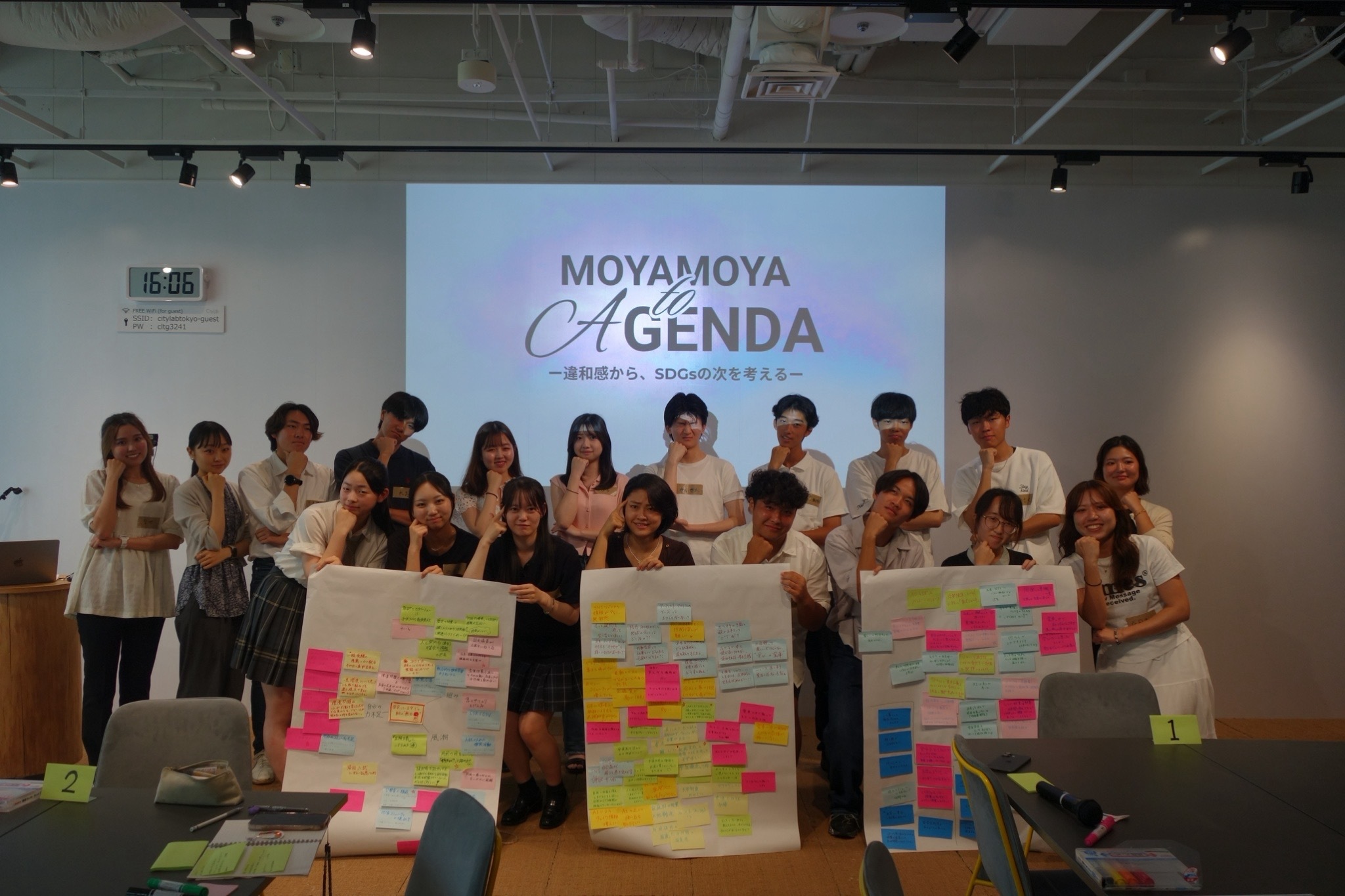
On July 20, 2026, the 2nd workshop for U-25 participants titled “MOYAMOYA to AGENDA: Thinking Beyond SDGs from Discomfort,” organized by the Kanie Seminar Beyond SDGs Youth Group (Representative: Eri Kodama, 4th-year student, Faculty of Policy Management, Keio University), was held at City Lab Tokyo.
Event Overview
Date: July 20, 2026
Venue: City Lab Tokyo
Participants: Approx. 20 participants (high school students to young professionals)
Workshop Structure
Compared to the first session, this workshop was designed to make it easier for participants to voice their moyamoya (lingering doubts, frustrations, and unresolved questions) and visualize the connections between them. The session proceeded in four steps:
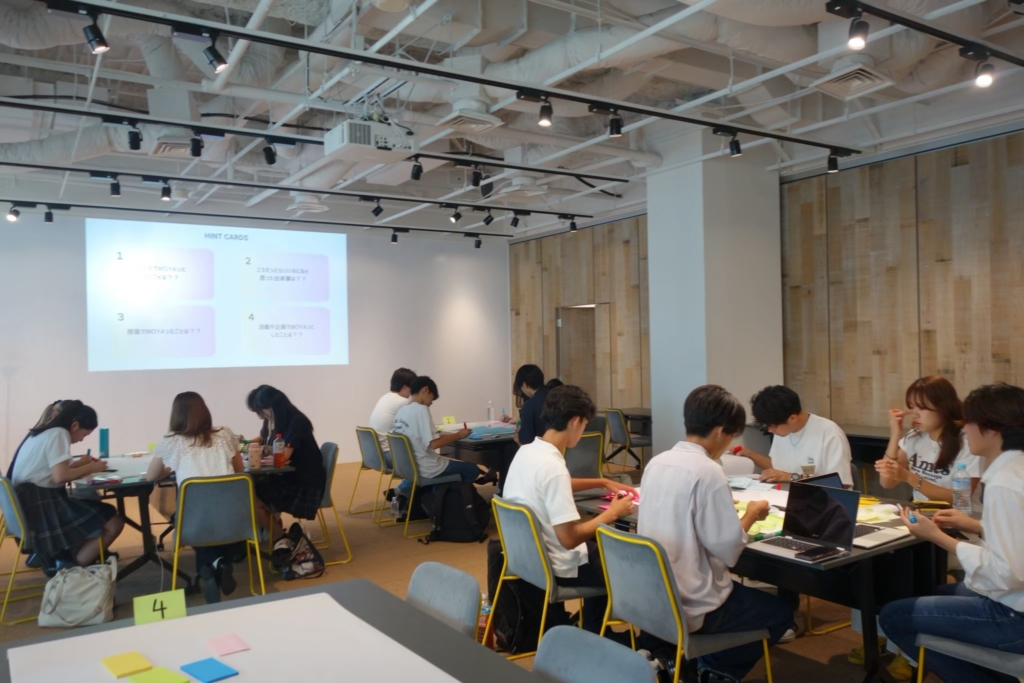
1. Sharing the origins of each participant’s activities, current motivations, and challenges within small groups.
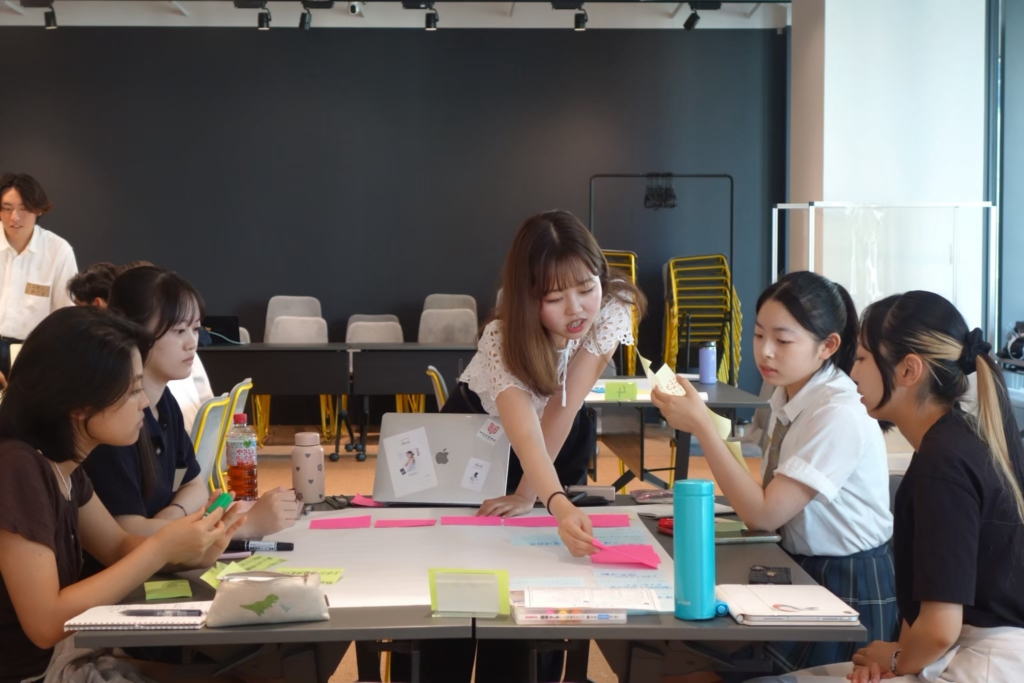
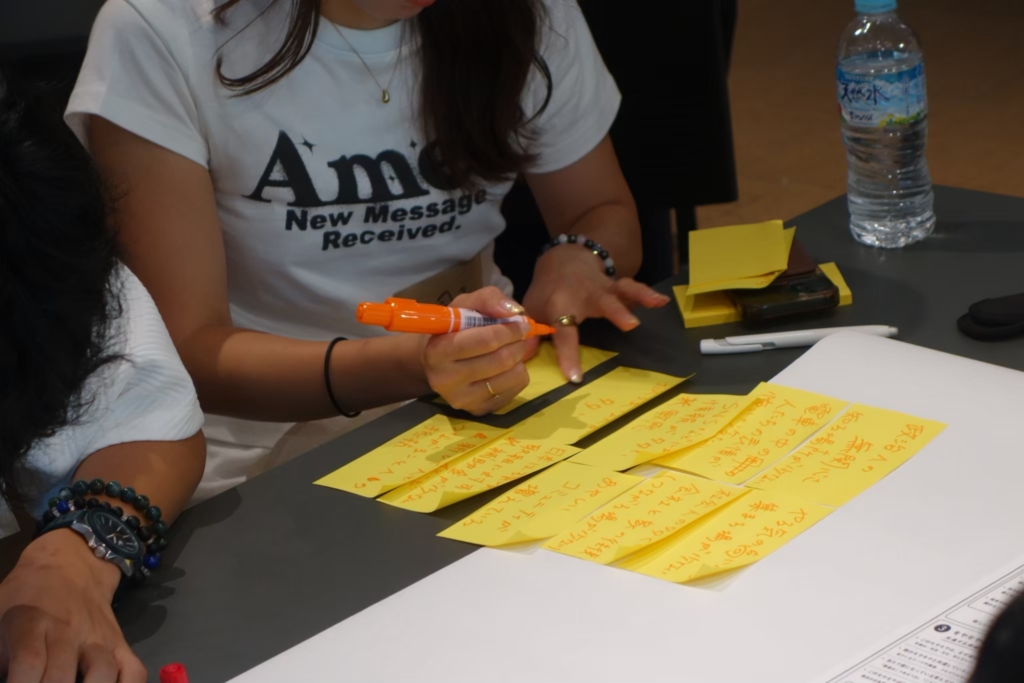
2. Writing down moyamoya felt in daily life and society from both “personal-scale” and “societal-scale” perspectives using large chart paper, sticky notes, and prompt sheets.
3. Freely arranging and moving the sticky notes to discuss the relationships, underlying values, and commonalities among different moyamoya.
4. Organizing each group’s discussion and sharing key highlights with all participants.
Following the group presentations, a talk session was held with Professor Norichika Kanie and corporate and government representatives to gather perspectives from businesses and researchers and clarify key challenges.
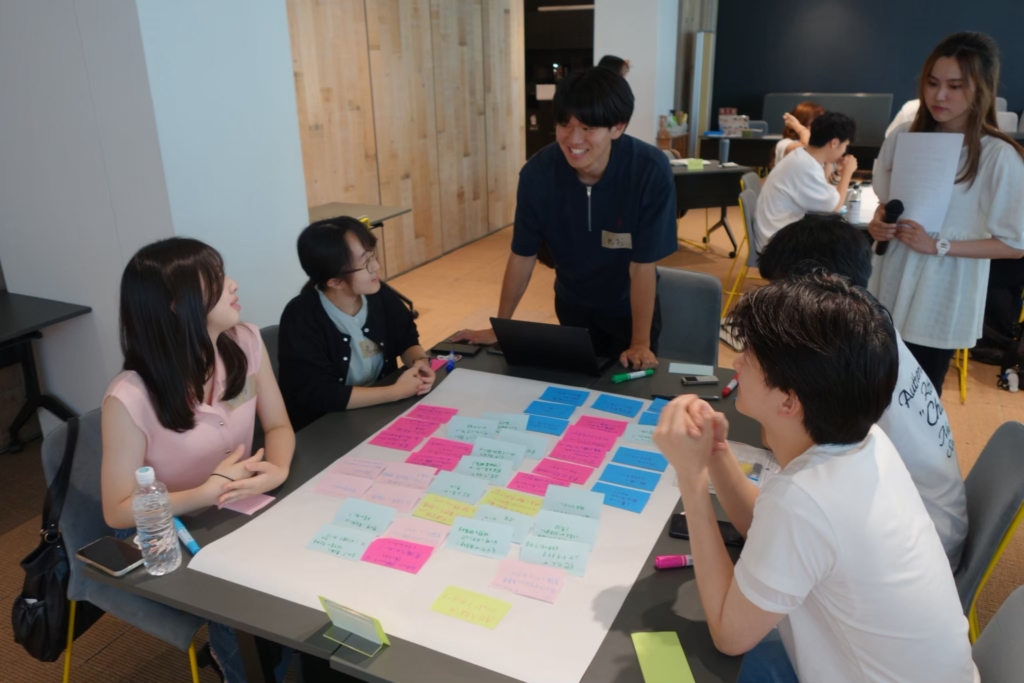
Highlights from Each Group
◾️Group 1: Unconsciously Assigned Labels
Participants shared numerous moyamoya related to how others perceive them and the labels unconsciously placed upon them—such as being viewed as “overly earnest” or “try-hard” for participating in student organizations, or finding it hard to express opinions that differ from those around them. As the discussion progressed, participants noted that worrying about others’ perceptions often prevents young people from speaking proudly about their activities or makes them hesitate to take on new challenges.
They also shared a challenge in communicating with businesses and experts: holding back out of deference because “the other person has far more knowledge and experience, so maybe I shouldn’t voice my opinion,” which makes candid exchange difficult. Through this, it became clear that psychological barriers created by labels and differences in status may be hindering young people’s proactive action and engagement with society.
Ultimately, the group agreed on the importance of creating environments where young people can express their ideas and take on challenges without overly worrying about external judgment. Specifically, they concluded that supportive adults who champion youth initiatives, connections with peers, and communities where people can safely exchange opinions regardless of status can empower young people to take action.
◾️Group 2: Students’ Sense of Powerlessness in Society
Participants in this group shared diverse moyamoya stemming from inquiry-based learning, education, environmental issues, and everyday life. Discussions deepened particularly around the “sense of powerlessness” experienced while engaging in inquiry-based projects—for instance, wanting to change society yet feeling unable to act effectively due to a lack of knowledge, experience, or networks.
Through dialogue, the group identified three underlying factors behind this sense of powerlessness: “one’s own lack of capability,” “societal structures,” and “social climate.” Furthermore, they discussed a potential vicious cycle: feeling inadequate leads young people to rely on social validation or pre-existing “correct” answers, yet becoming overly conscious of external evaluation causes them to prioritize social approval over what they genuinely want to pursue—which in turn reinforces their sense of powerlessness.
To alleviate this powerlessness, participants pointed to the importance of adults who affirm their efforts, peer connections, access to necessary information and opportunities, and safe spaces to exchange ideas without being pressured to find a single right answer. While the group did not arrive at a definitive conclusion, the session provided a meaningful opportunity to reframe powerlessness—previously viewed as a purely personal emotion—in relation to broader social structures and values.
◾️Group 3: The Difficulty of Finding Like-Minded Peers
At the personal scale, participants raised concerns such as unconscious consumption habits, over-reliance on video streaming, doubts about education where genuine learning has become hollow, and anxieties around interpersonal relationships. At the societal scale, discussions spanned a wide range of issues: institutional challenges such as preserving traditional culture and disaster preparedness; gaps in education and welfare where support fails to reach those without clear “labels” (such as formal school refusal); online harassment on social media; and a social atmosphere that mocks those interested in social issues as “try-hards.”
Although these moyamoya initially seemed disconnected, deeper discussion revealed shared underlying issues in social structures and values:
The suffocating pressure of “right-answerism”: In a society that constantly demands clear frameworks and single “correct” answers, people struggling in the “gray areas” that cannot be neatly categorized as black or white fall through the cracks of support systems. Spaces are needed where these ambiguous states are accepted as they are and openly discussed.
Limitations of capitalism and creating new value: Participants voiced the need to build alternative value standards outside the capitalist framework—and mechanisms to circulate them—in order to sustain and recognize vital contributions that cannot be easily monetized, such as traditional culture and volunteer work.
Declining questioning skills amid information overload and opaque decision-making: Rather than passively consuming vast amounts of information, we need environments that turn everyday questions into learning. Additionally, to dispel the powerlessness felt when voices go unheard in schools or welfare facilities, participants pointed to making decision-making processes transparent so anyone can understand the system and feel empowered to speak up.
The difficulty of finding peers: A theme that resonated strongly across the group was the isolation felt when speaking out on social issues. To overcome this, accessible communities are essential—places where anyone can take small, manageable steps to participate and openly share their moyamoya without fear of exclusion.
Talk Session
Following the group presentations, the second half of the event featured guest speakers—Professor Kanie alongside representatives from business and government—who shared their perspectives on Beyond SDGs and responded to questions from the youth participants.
◾️Norichika Kanie (Professor, Graduate School of Media and Governance, Keio University)
The First Step in Voicing Moyamoya: Creating Inclusive Dialogue Spaces That Embrace Nuance
Prof. Kanie commended the workshop discussions for viewing social issues as a “gradation” (spectrum) rather than forcing them into rigid categories or labels. He noted the unique value of this community as a space transcending boundaries of age, academic discipline, nationality, and status, where participants can voice moyamoya that do not fit into existing boxes. To sustain this value, he proposed designing mechanisms and clear objectives to evolve the initiative from a one-off event into an ongoing community.
Responding to the observation that many people want to talk to someone or take action but struggle to take the first step, he emphasized that people must first know such a space exists. Beyond that, a psychologically safe community is vital—one where even seemingly minor personal worries can be shared without fear of being dismissed or labeled “overly earnest,” and where participants collectively cultivate a norm of non-exclusion.
Navigating Abundant Information and Social Issues: The SDGs as a “Common Language,” Not a Cure-All
Addressing concerns about difficulty accessing information, lack of opportunities to speak, and feelings of powerlessness, Prof. Kanie pointed out that while the internet and AI have made general information widely accessible, the key challenge moving forward is how to seek out localized, tacit knowledge held only by practitioners, local governments, and experts. Rather than stopping at “I don’t know because it’s not online or on AI,” he stressed that the resourcefulness to gather surrounding context and consult experts holds immense value in itself.
Regarding a question on whether the SDGs can connect diverse actors—such as residents, companies, schools, and local governments—around initiatives like used cooking oil collection, he noted that a major achievement of the SDGs is enabling topics once discussed separately (energy, water, traditional culture, environment, local communities) to be addressed under the shared framework of “sustainability.” However, he cautioned against labeling everything as “SDGs,” which risks blurring specific issues. Instead, he emphasized moving back and forth between examining individual challenges in depth and using the SDGs to see the bigger picture.
◾️Perspectives from Business and Government Guests
・Expanding Allies Through How We Communicate the SDGs — Okamoto (Kanagawa Prefectural Government)
Sharing firsthand experience from inside the prefectural government, Okamoto noted that even SDGs-focused departments can be perceived as “overly earnest,” making it challenging to build internal allies. Rather than simply urging colleagues to “work on the SDGs,” Okamoto focuses on framing it around the other party’s existing work and benefits—explaining, “What you are already doing actually connects to the SDGs, and you can leverage our network to advance it.” Building allies requires not only ideals, but tailoring communication to the other person’s standpoint.
・Bridging Youth and Business — Aratani (Nikkei Inc.)
Aratani highlighted the intrinsic value of participants putting their everyday moyamoya into words, noting that working adults often overlook such feelings amid busy schedules, making the discussion a valuable learning experience for adults as well. Addressing the difficulty students feel in speaking as equals with companies, Aratani emphasized that companies are actively seeking younger generations’ perspectives, adding that media outlets like Nikkei have a role to play in connecting youth voices with businesses and society, and expressing hope that this community will continue.
・The Value of Leaving Moyamoya Unresolved — Komatsu (Tokyo Tatemono Co., Ltd.)
Komatsu reflected on the danger of oversimplifying matters into “right vs. wrong” or “good vs. bad” when pursuing efficiency in the workplace. Through the workshop discussions, Komatsu felt that holding off on immediate answers and reflecting on multiple values while embracing unresolved moyamoya leads to richer dialogue. Komatsu also introduced Tokyo Tatemono’s concept of the “Regenerative City”—going beyond sustainability (merely maintaining the status quo) to actively regenerating nature, culture, and daily life into a better state—emphasizing that recognizing diverse values rather than a single standard is essential to achieving this vision.
Q&A: Dialogue Between Adults and Youth
Q: Why do companies seek opinions from students and young people rather than just experts?
A: Because young people are the generation that will sustain future society, businesses, and cities, incorporating their values into current business operations and communications directly drives corporate growth. In urban development as well, the perspectives of young people who will actually live in and use these cities are indispensable, and local governments are eager to engage youth as active players in problem-solving.
Q: How can high school and university students engage in dialogue with companies on equal footing?
A: In response to an experience where a high school student felt brushed aside and not taken seriously by a company, speakers advised bringing one’s own hypotheses and viewpoints to the conversation—saying “I see this specific challenge here, and this is what I think,” rather than simply asking “Please tell me about this city.” They also suggested utilizing intermediaries receptive to youth dialogue, such as municipal pitch events or media-hosted educational programs, rather than always approaching companies cold.
Additionally, university students shared practical insights from their own experience: when pitching proposals to companies, it is crucial to highlight “what only students can do,” “why it matters specifically for that company or community,” and “how the proposal can be implemented with minimal burden on the company.”
Wrap-Up
This session underscored the importance of resisting the urge to rush toward a single “right answer,” instead putting everyday moyamoya into words and contemplating diverse values while sitting with that ambiguity. In a society driven by efficiency, enabling young people and businesses to engage in dialogue on equal terms is no easy task. Yet, as echoed in Tokyo Tatemono’s concept of the “Regenerative City,” embracing diversity beyond monolithic value systems is essential for building the cities and society of tomorrow. This session served as a space where candid youth voices intersected with corporate perspectives, sparking fresh insights on both sides.
Another central theme was how to build a community where small, personal moyamoya can be safely articulated and shared across boundaries of status, age, and discipline, ultimately translating into societal issues and concrete action. While the SDGs serve as a vital common language in this process, participants affirmed that thinking toward Beyond SDGs requires moving dynamically between specific, individual challenges and broader systemic connections, rather than treating “SDGs” as a catch-all label.
Sustaining a community that bridges youth voices with business and society holds profound significance for the future. Moving past simplistic binaries of “right or wrong” toward regeneration into a better state through diverse perspectives—this session marked a meaningful first step in that direction. Fueled by the energy and moyamoya born from this dialogue, we look forward to carrying this momentum into our 3rd session and our own concrete actions ahead.