
3rd Workshop Report: “MOYAMOYA to AGENDA” for U-25
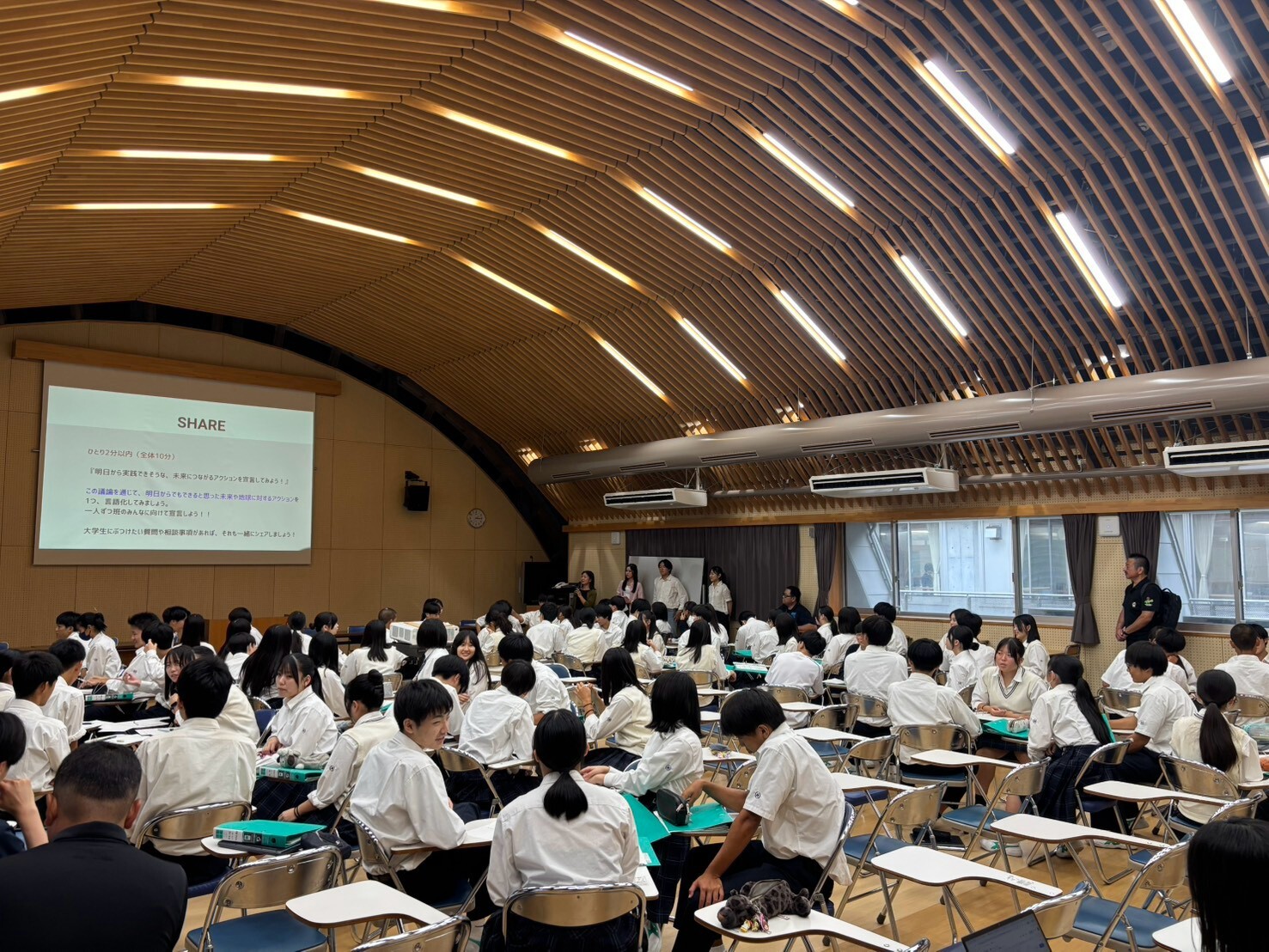
On September 8, 2026, the 3rd workshop for U-25 participants titled “MOYAMOYA to AGENDA: Thinking Beyond SDGs from Discomfort,” organized by the Kanie Seminar Beyond SDGs Youth Group (Representative: Eri Kodama, 4th-year student, Faculty of Policy Management, Keio University), was held at Susaki Sogo High School in Susaki City, Kochi Prefecture.
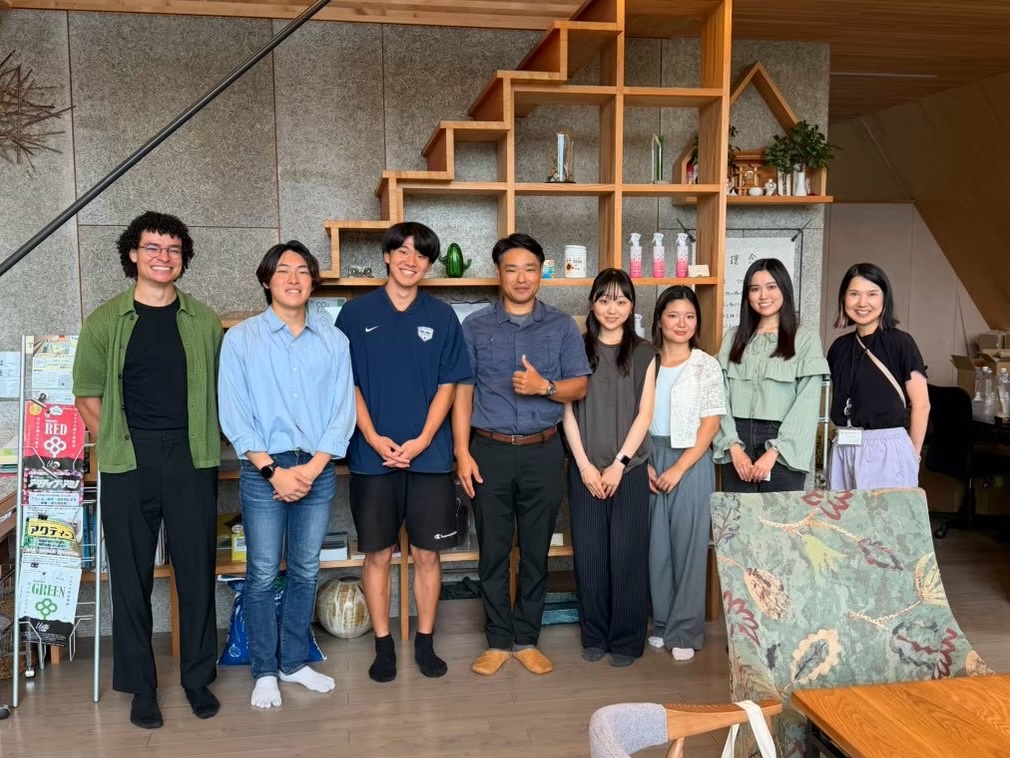
The following day, September 9, the group also visited local businesses and the city hall.
In this report, we share highlights from both the workshop and our visits to local companies and municipal offices.
Event Overview
Dates: September 8, 2026 (Workshop) & September 9, 2026 (Visits to Local Businesses and City Hall)
Venue: Susaki Sogo High School (Susaki City, Kochi Prefecture)
Participants: Approx. 80 students from Susaki Sogo High School
This initiative was organized to connect communities working on regional revitalization with Keio University students, creating opportunities for local high schoolers to interact with university students from urban areas. By sharing and discussing the moyamoya (lingering doubts, frustrations, and unresolved questions) they feel in everyday life, the workshop aimed to help students recognize how personal feelings of discomfort are connected to broader societal issues.
Workshop (September 8)
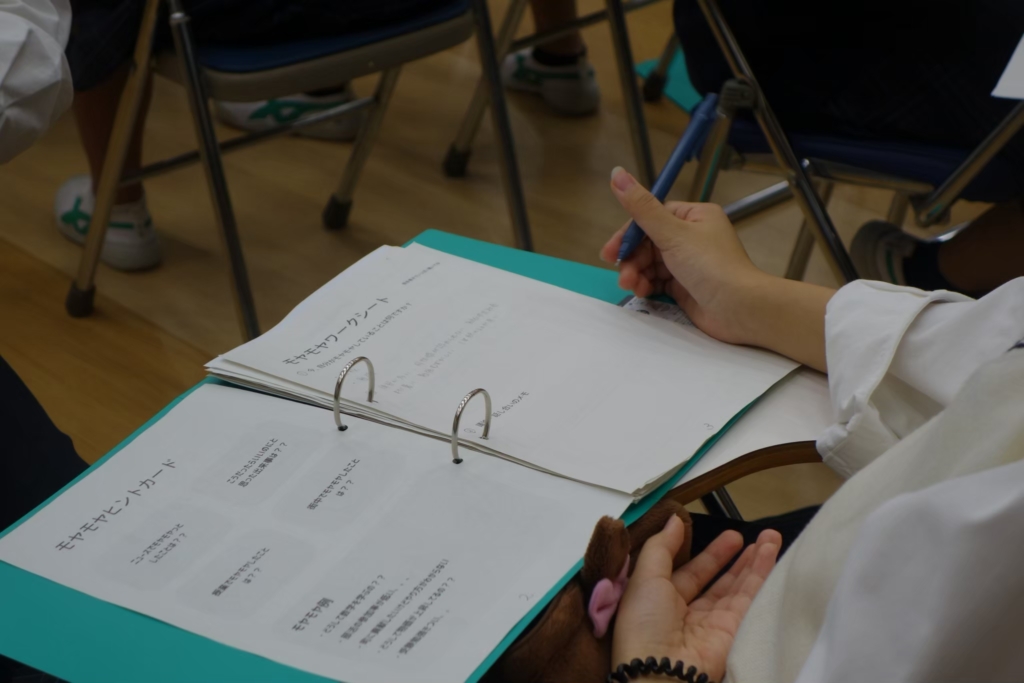
Compared to the previous two sessions, this workshop welcomed a significantly larger group of approximately 80 participants within a limited timeframe. To make the most of the session, students were asked to reflect on their moyamoya in advance, allowing the workshop to proceed smoothly through the following five steps:
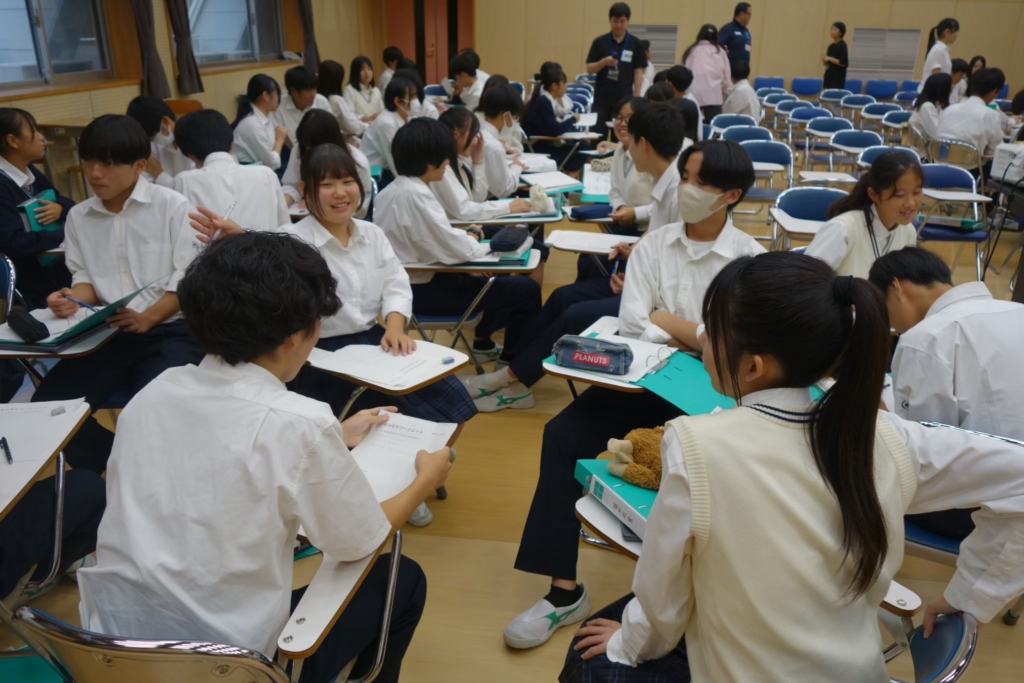
1: Sharing the moyamoya they had prepared beforehand regarding their daily lives and local community within small groups.
2: Discussing commonalities, connections, and the underlying values behind each other’s moyamoya.
3: Discussing within each group, “What kind of community and society do we want to see?” and “What is needed to make that happen?”
4: Based on their discussions, formulating and declaring a “Future Action We Can Start Tomorrow” in each group.
5: Having several groups present their discussions and action declarations to the entire assembly.
Learning from the first two sessions—where discussions tended to remain open-ended and diffuse—we incorporated a final stage for formulating and presenting action declarations, aiming to move beyond simply sharing moyamoya and translate insights into concrete action.
◾️Participant Voices
・Feedback from Participating Students
The most widely shared takeaway among students was a fresh perspective: that the moyamoya they experience in daily life actually holds the potential to drive solutions to social and environmental issues. Many students also expressed a strong sense of personal fulfillment from putting their feelings of discomfort into words through group dialogue and organizing the underlying reasons and ways to improve them.
While some noted that listening to others’ moyamoya opened their eyes to different viewpoints and experiences, others discovered common ground between their own moyamoya and those of their peers—realizing that personal concerns carry broader societal dimensions. Overall, by confronting their own emotions and discomfort and sharing them with others, participants came to appreciate the importance of both self-reflection and dialogue.
・Applying the “Moyamoya → Why → What Next” Approach Across Various Settings — Onoguchi (Teacher, Susaki Sogo High School)
I believe this ‘MOYAMOYA to AGENDA’ initiative was deeply meaningful. The workshop’s thinking framework—visualizing questions through the ‘Moyamoya → Why → What Next’ process—is an effective methodology that can be applied well beyond Beyond SDGs, including in periods for integrated studies, music classes, homeroom activities, and extracurricular clubs. Helping students recognize the diversity of moyamoya felt by each individual is also vital for fostering their interest in environmental and social issues.
Visits to Local Businesses and City Hall (September 9)
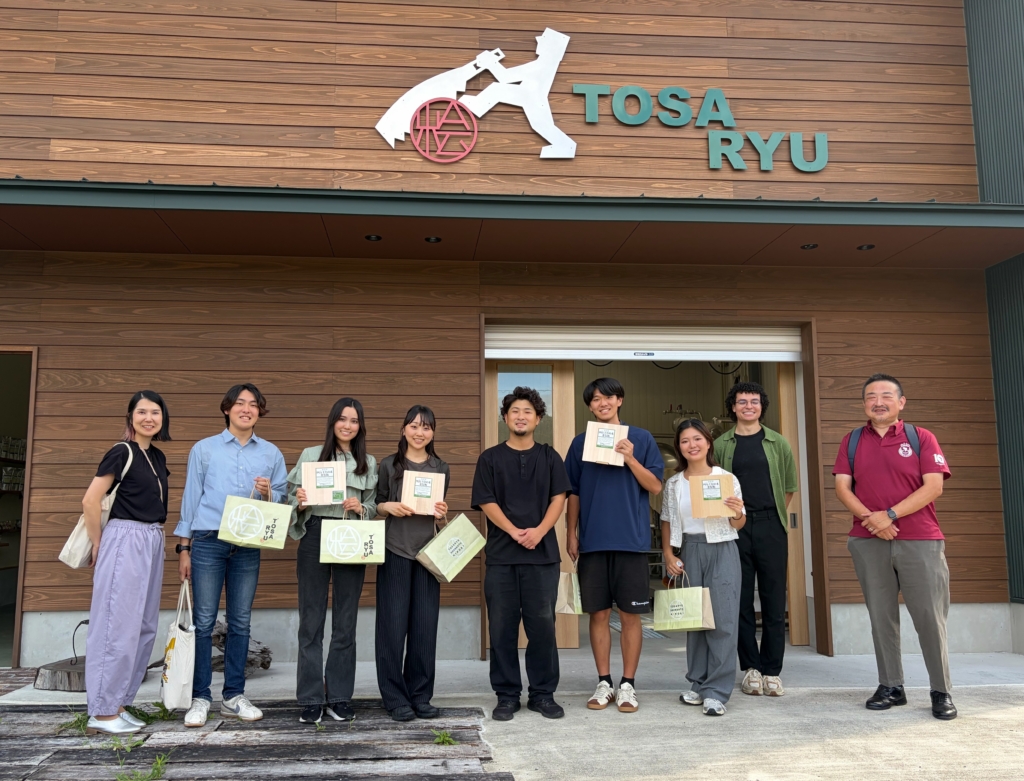
・Ueta LABO & Tosaryu
Learning about the philosophy shared by both companies—utilizing every bit of natural resources without waste—gave us a deep understanding of the true essence of sustainability.
・Susaki City Hall
We heard from officials in charge of the SDGs about their ambitious, passionate initiatives—ranging from grassroots activities engaging local residents to submitting reports to the United Nations. We were truly impressed that a small municipality with a population of under 20,000 possesses such rich and compelling strengths.
Wrap-Up
Conducting this session with a vastly different participant size, demographic, and workshop structure compared to the first two workshops brought a wealth of new learnings. Providing high school students with an opportunity to articulate their everyday feelings of discomfort and reflect on the background behind them was deeply meaningful, and we are grateful to have been given such a platform.
At the same time, we recognized the need to enhance facilitation, refine how questions are framed, and improve how we engage participants in order to effectively bridge deeper exploration of moyamoya with concrete action. Determining the overarching themes, direction, and ultimate landing points of discussions also remains an area for further refinement. Moving forward, we will build on these lessons to continuously improve and brush up our program.
Finally, we extend our heartfelt gratitude to Onoguchi and all the students at Susaki Sogo High School, Kawashima, Kito, and Gray at Susaki City Hall, as well as everyone at Ueta LABO and Tosaryu.