
3rd Public Private Forum on Beyond SDGs: Forum Report 【Working Group Activity Report】
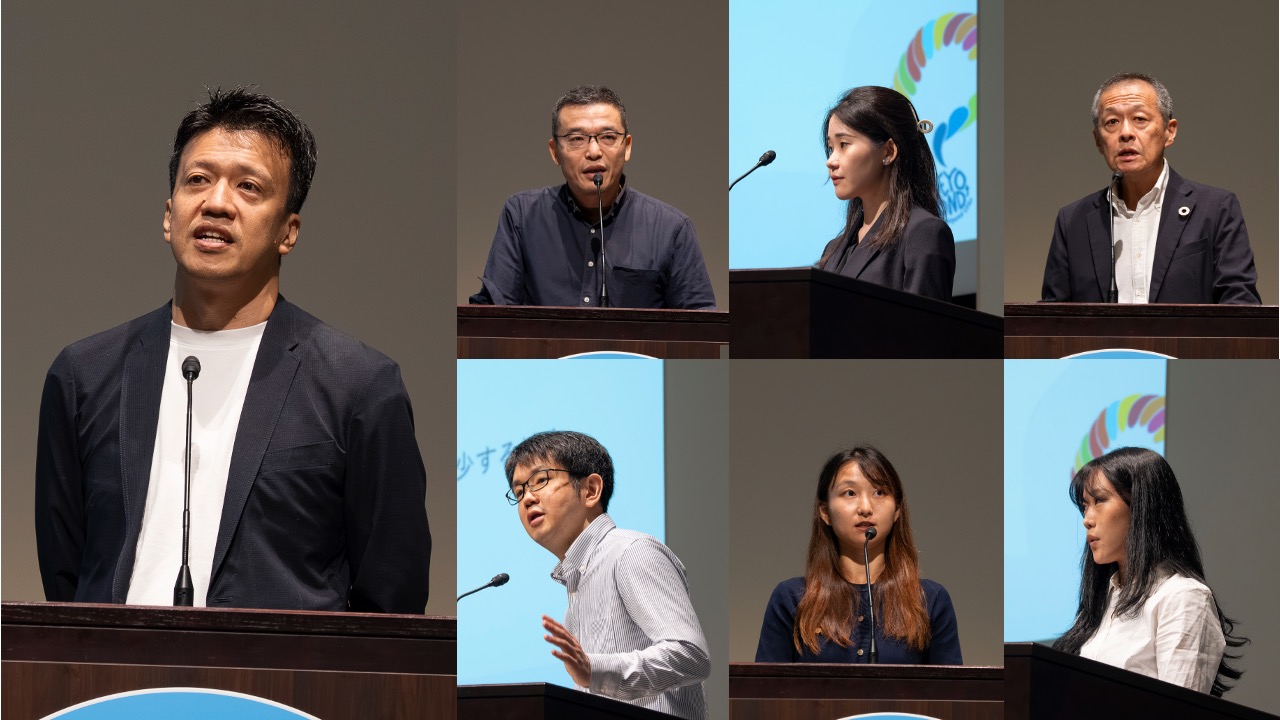
At the Public Private Forum on Beyond SDGs, working group discussions centered on the themes of the Six Entry Points presented in the United Nations’ Global Sustainable Development Report (GSDR) are progressing. In this session, Tomoki Ehara of E-konzal explained a review framework to gather a broad range of discussion points across each working group and lead them toward future recommendations. Subsequently, co-chairs and presenters of the six working groups reflected on discussions up to the 2nd forum, reporting on key discussion points surrounding health and well-being, just economies, food and nutrition, energy, cities, and global environmental commons, as well as challenges to be further deepened moving forward.
”Review Framework Through Working Groups of the Public Private Forum on Beyond SDGs”
Tomoki Ehara (CEO, E-Konzal / Senior Research Fellow, Keio Research Institute at SFC)
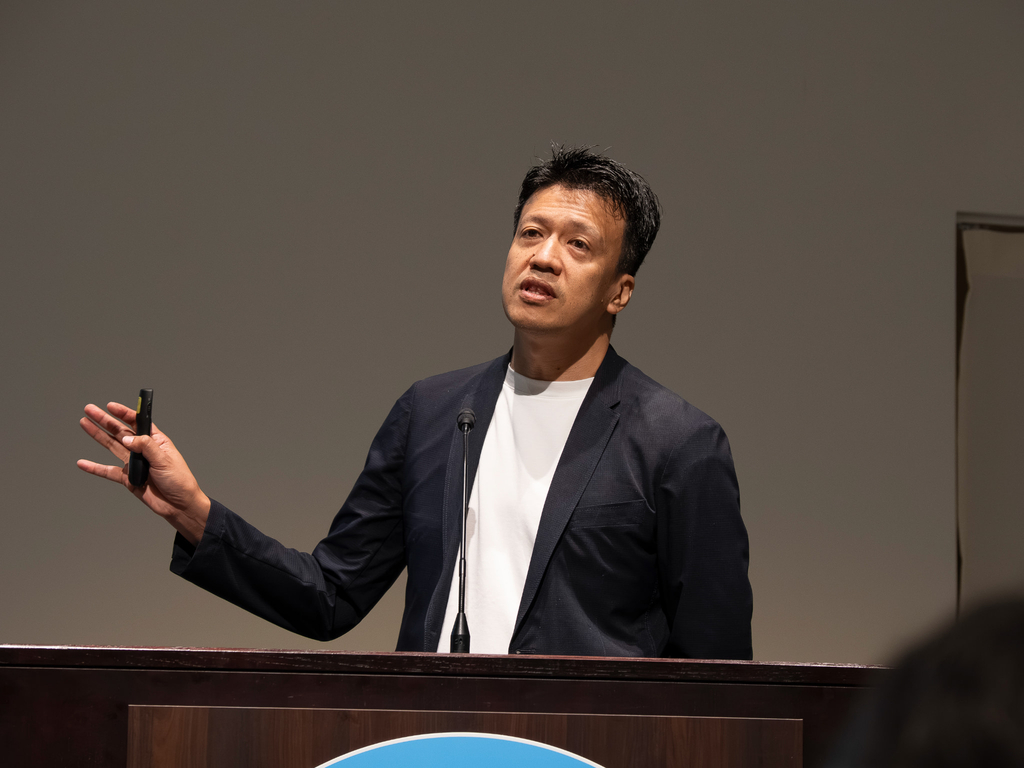
Regarding how to structure working group discussions, we have held repeated discussions with co-chairs and the Secretariat since the conclusion of the 1st Forum. As approaches, there was a method of first deciding outputs that would serve as effective inputs to the United Nations and proceeding efficiently, and a method of gathering discussion points broadly without fixing boundaries precisely because the theme is broad like the SDGs. Through discussions with co-chairs, it became clear that discussion points and perspectives varied considerably across working groups, so this time we adopted a policy of gathering points broadly rather than deciding outputs first. We strongly encourage you to raise discussion points that are not visible in everyday international discussions or points you feel have been overlooked in front-line activities.
As a clue to facilitate this, we prepared four frameworks. First is the “Perception of current challenges.” Along with fact-based discussions, taking into account changes in the international situation since 2015, participants will discuss what has changed, what could not be achieved, and what has emerged as new discussion points. Second is the “Direction of desired society.” As an opportunity for vision-making, each Entry Point will discuss what kind of desired society to envision based on current realities and the international situation. Third is “Target frameworks.” Working groups with a consensus on direction will discuss more concrete target setting, such as frameworks for goals, targets, indicators, and target years. This also includes whether new discussion points like AI and space should be added as targets. Fourth is the “Broad framework for means of implementation and governance.” Amid points noting the declining cohesive power of the United Nations, discussions will address legal frameworks, bottom-up implementation methods, financial mechanisms, and governance approaches.
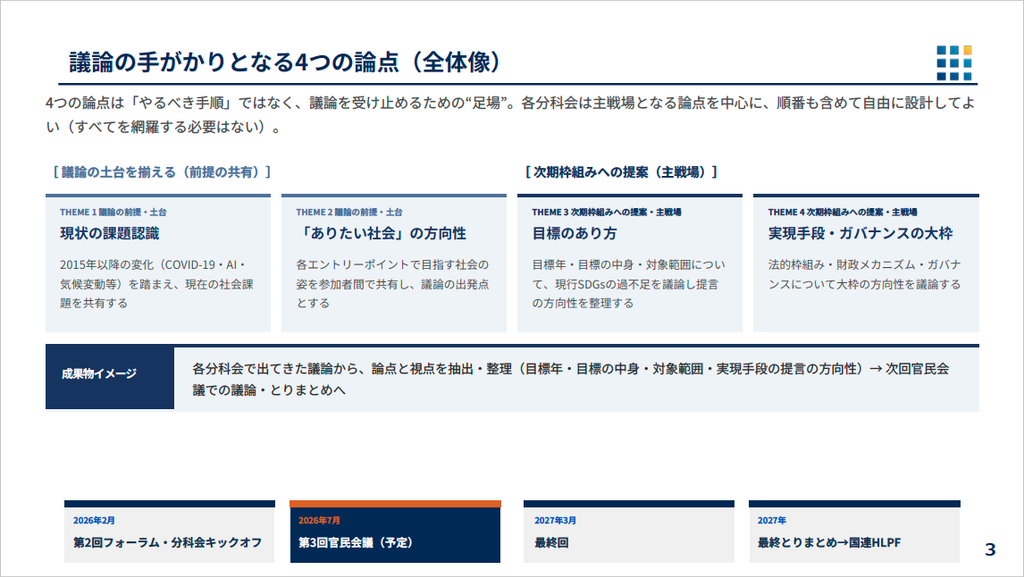
These four serve like a map indicating which discussion point is currently being discussed, and do not mean that other points should not be discussed. Since some working groups have a certain consensus on the desired society while others need to start their discussions from there, the procedure is left entirely to the discretion of the co-chairs. Beyond the day of the forum, we believe it is also effective to hold repeated online meetings within working groups as needed or to pose common questions to consolidate opinions.
In working group discussions, this framework is merely a guideline. We believe it is crucial for the Public Private Forum on Beyond SDGs that you actively raise discussion points that have been overlooked in your activities or Japan-specific points that differ from global trends.
Presentation materials are available here
Working Group 1
Human well-being and capabilities
Masaki Inaba (Program Director, Global Health, Africa Japan Forum)
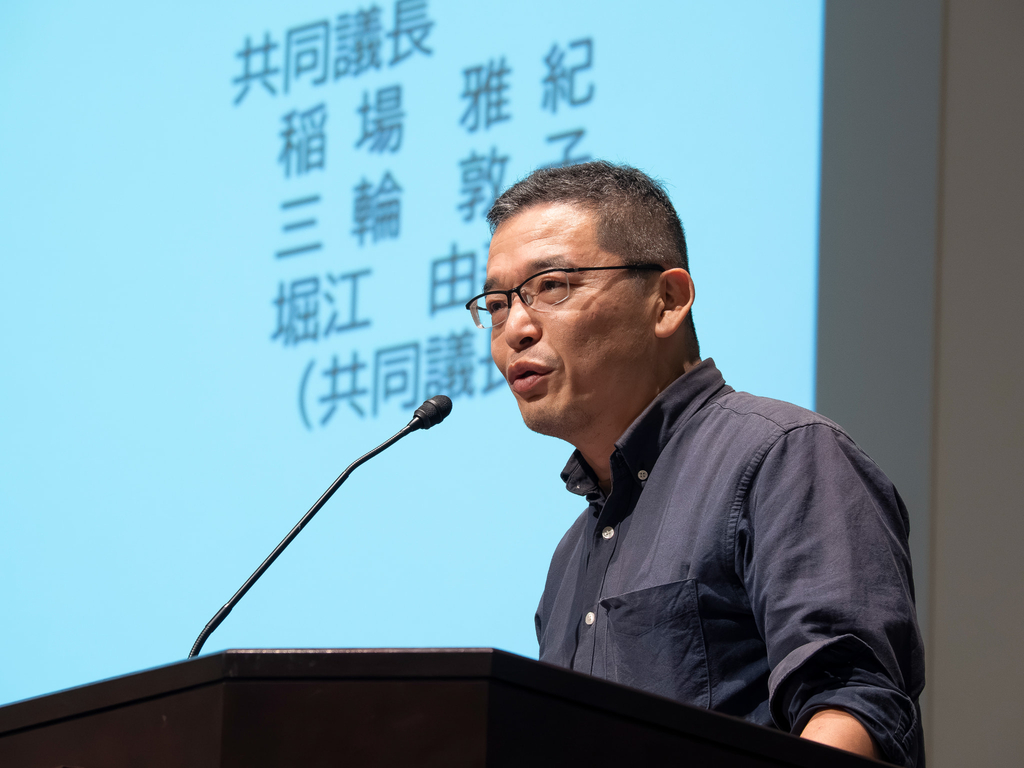
Because the first Working Group session on February 6 of this year was on a topic of high interest, many people participated. It was unfortunate that there was insufficient time for discussion. Therefore, heading into the second session, we conducted interviews with experts and a survey among stakeholders. The interviews were conducted with diplomats and experts who have been involved in negotiations and design since the formulation stage of the SDGs. In the interviews, we listened to and discussed opinions on how to overcome deepening North-South division in multilateral negotiations, how to maintain the frameworks of universality and interconnectedness, and how to respond to AI and science, technology, and innovation (STI).
The survey was conducted among 20 stakeholders, including major groups (persons with disabilities, low-income groups, LGBTQ+, senior citizens, children, youth) and NGO representatives. Regarding changes over the ten years since the adoption of the SDGs, respondents noted that while certain progress has been observed in Goal 11 (Sustainable Cities and Communities) and dementia countermeasures, little improvement has been seen in gender equality and poverty issues. While the SDGs functioned positively as a common language for various initiatives, points were also raised that the principle of “leaving no one behind” has not translated into practice. Regarding public understanding, while there were many critical opinions that environmental images take precedence and recognition of poverty and disparity remains weak, its establishment in school education was praised.
Regarding the state of post-SDGs, 30% of respondents felt extending existing goals was sufficient, whereas 70% believed new goals should be formulated to match the era. Additional discussion points raised included goals specifically dedicated to compliance with international humanitarian law, and goals for addressing catastrophic situations and resilience recovery. We intend to build upon these results in future discussions.
Working Group 2
Sustainable and just economies
Erina Kondo (Member, G7/G20 youth Japan)
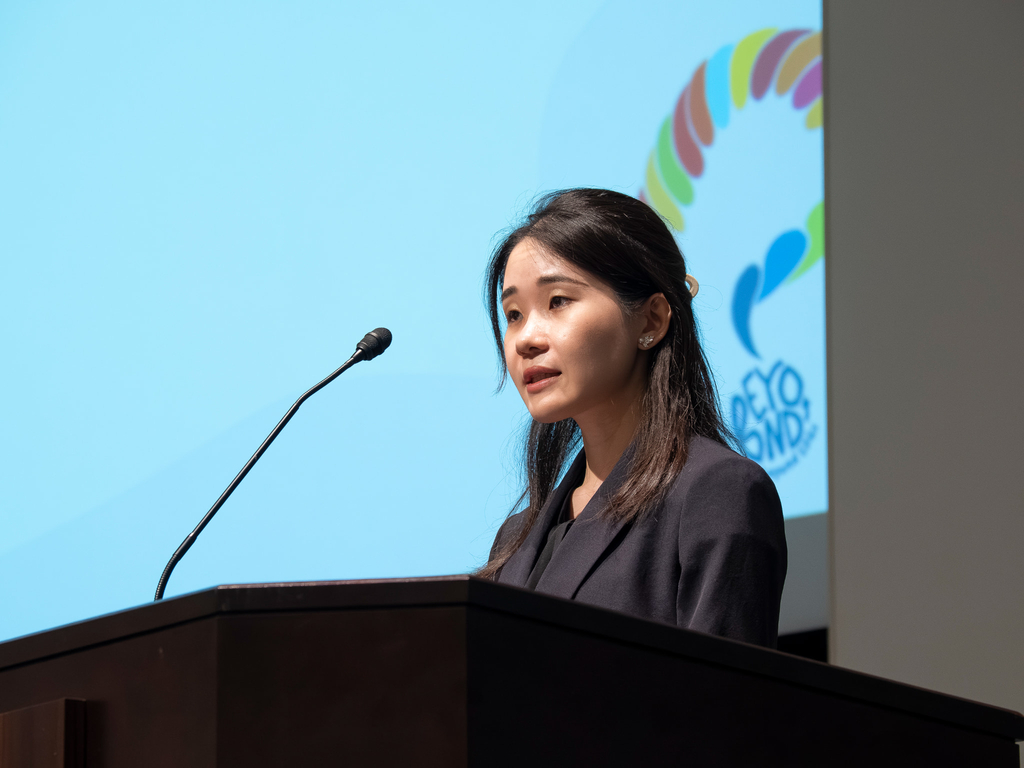
In our Working Group, because there was a deep-seated awareness of issues regarding the economic system itself behind many unachieved SDG challenges, we began our discussions from philosophical questions—”What is the economy?” and “What is justice?”—before discussing systems and policies.
The first discussion point was “What does the economy exist for?” Voices noted that while current capitalism generates wealth, it carries widening disparities and wealth concentration, making economic growth an end in itself. Returning to the etymology Keisei Saimin (“governing society and relieving the people”), we shared the perspective that the economy is a social mechanism for people to live better lives—less about monetary flows and more about human connections themselves—and that trust, mutual aid, and local communities should be revalued as capital supporting the economy. The economy is embedded within society and the global environment, serving as the foundation supporting all Working Group themes, including health, cities, and energy.
The second point was re-questioning “justice.” Differentiating concepts such as judicial justice, fair competition, and disparity reduction, a direction emerged where it is crucial that everyone can participate convincingly, that fair competition takes place on the foundation of guaranteed human dignity in living, and that options exist to re-choose one’s life path.
The third point was an economic model that does not reject the market economy, but combines it with gift economies, local communities, and social capital.
The fourth point was a just economy in the AI era. As social design premised on AI, discussions addressed AI governance, resolving information asymmetry, mechanisms for human participation in rule-making, and a just transition.
We have advanced discussions to the point where the purpose of the economy, the meaning of justice, new economic forms, and governance in the AI era must be considered as an integrated whole, and based on this foundation, we hope to substantiate the vision of a desired economy.
Working Group 3
Sustainable food systems and nutrition patterns
Jiro Ito (Executive Director of the Japan Cooperative Alliance [JCA])
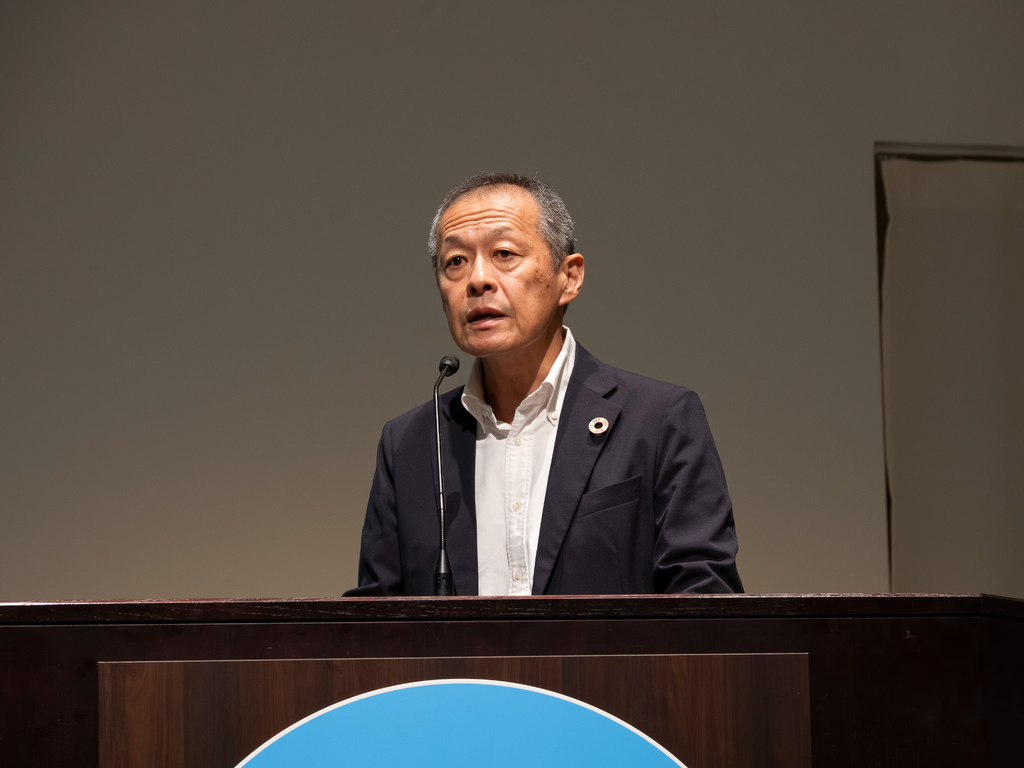
Participants in our Working Group have formed a relatively compact group of around 15 people so far, enabling face-to-face, visible discussions.
In the first session on February 6, co-chairs provided information regarding UN materials and their relationship to the 2030 Agenda, while sharing domestic challenges in Japan. While everyone initially held the impression that sustainable food systems are a global/macro challenge and nutrition is a personal/micro challenge, we confirmed that the two are in fact interconnected. Five main themes were presented during discussions, particularly highlighting the promotion of food understanding through experience and learning, lowering hurdles for better nutritional intake, and the necessity of institutional responses to widening economic disparities and relative poverty.
However, believing a single session was insufficient, we held a second online session on June 5, exchanging views after officials from the Ministry of Agriculture, Forestry and Fisheries (MAFF) and the Ministry of Health, Labour and Welfare (MHLW) explained national policies. MAFF shared content from the Basic Plan based on the Basic Law for Food, Agriculture and Rural Areas, as well as policies on food security and sustainable production. MHLW outlined three nutrition challenges facing Japan: excessive salt intake, young women being underweight, and nutrition gaps caused by economic disparities, emphasizing the importance of multi-stakeholder collaboration among food-related companies, financial institutions, educational entities, and local governments.
During the exchange of views, discussions covered the need to maintain a global perspective beyond domestic issues, and the necessity of creating mechanisms where every citizen can consider food and nutrition issues as a personal matter (jibungoto-ka) through learning opportunities and awareness beyond school education. Furthermore, a participant survey was conducted, and we will continue discussions based on those results.
Working Group 4
Decarbonizing energy systems and universal energy access
Takahiro Ueno (Senior Research Fellow, Central Research Institute of Electric Power Industry)
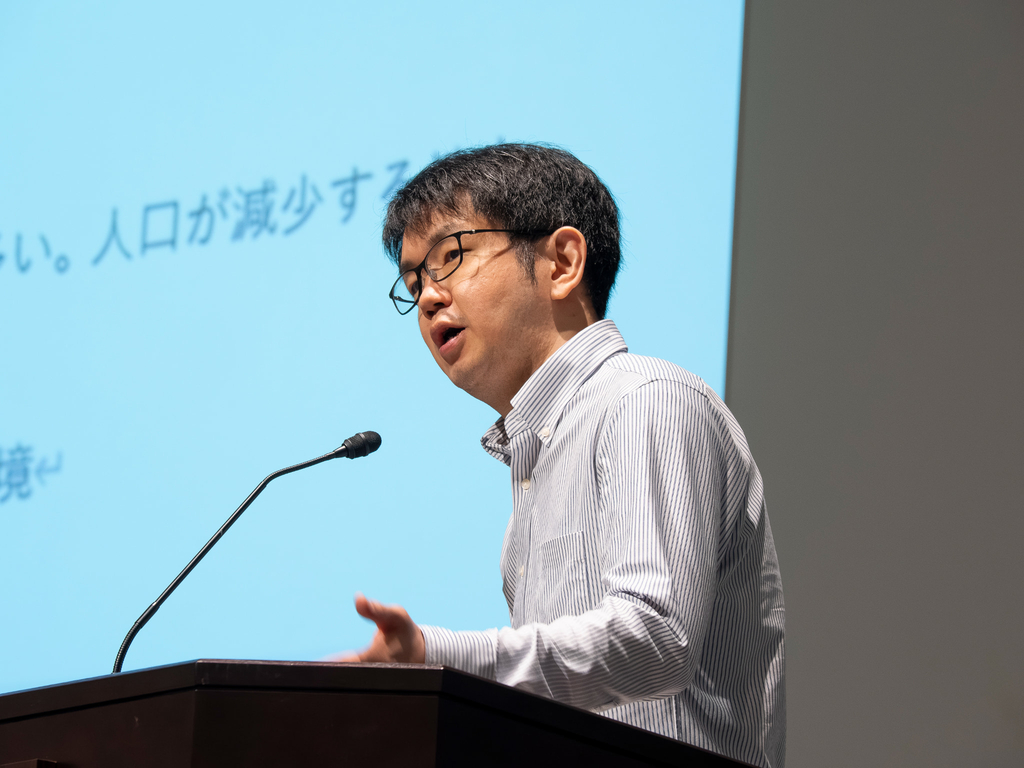
In the first Working Group session in February, opinions were voiced regarding “Perception of current challenges” and “Direction of desired society” from the framework explained by Mr. Ehara. In terms of challenge perception, in addition to specific trade-offs—such as surging power demand and increased emissions from the data center construction boom, and burdens on land use and ecosystems due to mass renewable energy deployment—macro trade-offs were highlighted, including urban vs. regional, economic development vs. security/environmental integrity, developed vs. developing nations, and intergenerational gaps. Mentions were also made of “SDG fatigue” in corporate and local activities.
Regarding the direction of a desired society, synergy-creation measures were raised, such as reviewing energy supply and demand structures, reviewing land use, optimization via technologies like IoT, strengthening resilience, and policy internalization of environmental externalities. Because trade-offs manifest differently by region, opinions noted that synergy approaches should also be examined regionally, alongside discussions on reviewing values and economic activities themselves (“knowing sufficiency” / taru wo shiru, the role of education/media, etc.). On the other hand, sharp critiques noted that synergy discussions are merely superficial idealism, while others argued that trade-offs should be resolved financially.
Following the first meeting, there was a major situational shift with the de facto blockade of the Strait of Hormuz. Today, while deepening our shared recognition from last time, we wish to step into “Target frameworks” and the “Broad framework for means of implementation and governance.” Regarding target frameworks, alongside Goal 7, we organized reference information including the Paris Agreement’s 2°C/1.5°C targets, the reconfirmation of the 1.5°C target at COP26, and the COP28 “Global Stocktake” agreements to triple renewable energy capacity and double the rate of energy efficiency improvements. We will continue discussions under the Chatham House Rule.
*1 A rule stating that participants are free to use information received during a meeting, but neither the identity nor the affiliation of the speaker(s), nor that of any other participant, may be revealed.
Working Group 5
Sustainable urban and peri-urban development
Moeko Onuki (Co-Head, SDGs-SWY)
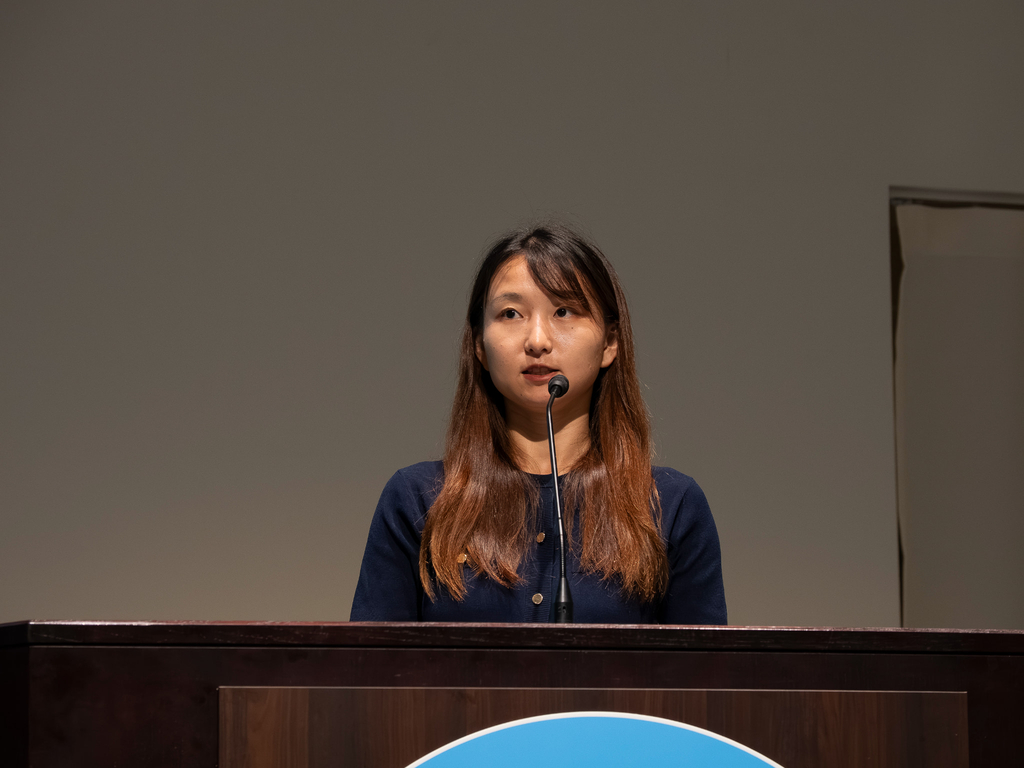
In addition to the first Working Group session, we held an additional online session in mid-June with approximately 10 participants.
In the first session, based on an awareness that traditional social systems premised on population and GDP growth need to be reviewed in a declining population society, we organized discussions into five challenges:
1. Limits of growth-oriented social systems, such as mega-infrastructure and large-scale redevelopment;
2. Shift from urban-rural binary opposition to relational populations and multi-hub living;
3. Transition to a regenerative society utilizing existing stock, such as vacant houses;
4. Tension between regional identity and globalization (including tourism and inbound travel); and
5. Regional well-being that cannot be captured by GDP alone.
In the additional session, posing questions such as “What does revitalization mean in your region?” and “Which regions are succeeding without population growth?”, three new discussion points emerged. First, regarding what actually constitutes the problem with population decline, opinions suggested that rather than population reduction itself, the breakdown in population structure and social division of labor is the real issue. As seen in the example of retiree generations serving as guides at Shuri Castle in Okinawa, the value of “margins” (yohaku) that bring human and regional happiness despite apparent inefficiency was shared. Second, on new ways of engaging with regions, discussions addressed the under-recognized reality of existing connections—such as double-school systems for regional study abroad and inter-municipal disaster cooperation agreements—and the potential for expanding relational populations through the Furusato Nozei (hometown tax donation) system. Third was the transition “from healthy life expectancy to happy life expectancy.” According to MHLW statistics, average life expectancy in Japan is 81 for men and 87 for women, whereas healthy life expectancy is 72 for men and 75 for women, with this gap widening. Taking into account data on youth suicide rates (highest on record for elementary, middle, and high school students), rising depression, and over 50% of single seniors feeling isolation as a familiar issue, the necessity of community planning from the perspective of happiness was shared.
Moving forward, we will deepen discussions on how insights unique to Japan as a front-runner in facing social challenges can be deployed globally.
Working Group 6
Global environmental commons
Kyoko Shimada (Co-Director of Policy Advocacy, Japan Youth Platform for Sustainability [JYPS])
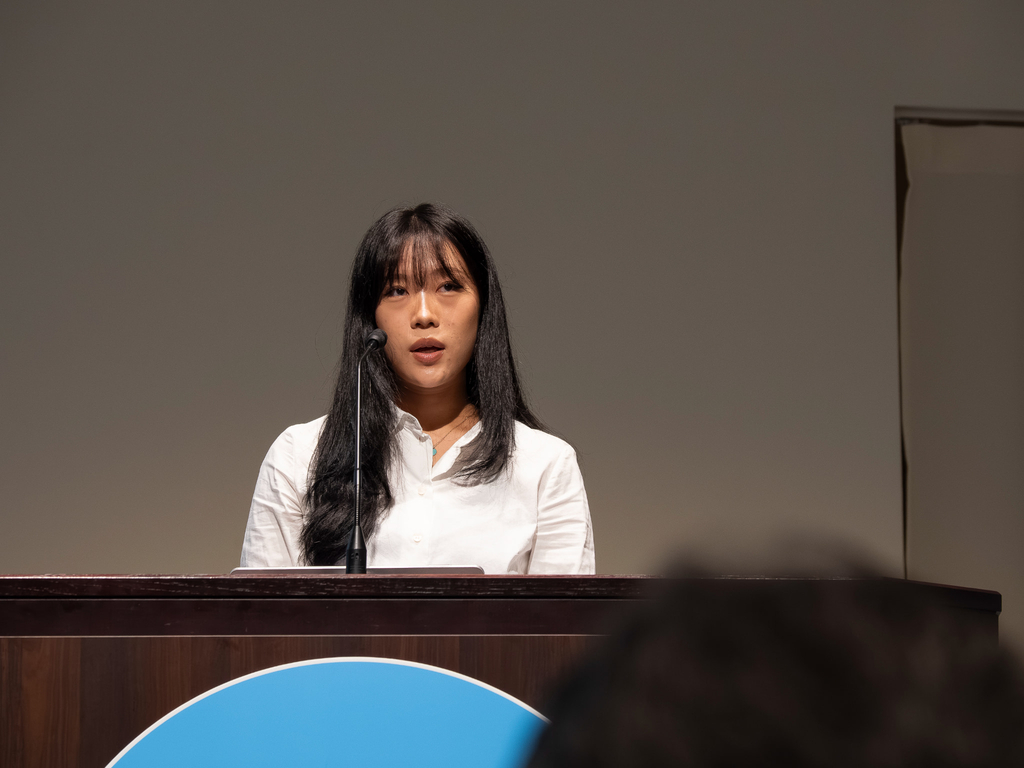
In the 2nd Forum, diverse participants from public and private sectors held active exchanges of views on new value systems in the Beyond SDGs era, building on the achievements and challenges of the SDGs. We organized those discussions into five points:
1. Mindset shift from management to coexistence: While the SDGs presented concrete goals by viewing the global environment comprehensively, points were made that the mindset of treating nature as an object of management remains, requiring a shift toward viewing humans as part of nature supporting one another. Furthermore, recognizing differences between European “management-oriented” views and Asian “being kept alive by nature” values, the necessity of a flexible framework respecting diverse cultures was shared.
2. Systems thinking for overall optimization: The importance of three perspectives—synergies, trade-offs, and spillovers—was repeatedly pointed out, confirming the need for policy design overlooking entire supply chains.
3. Personalization (jibungoto-ka) and localization: Addressing voices that the 169 targets of the SDGs feel distant, the importance of tailoring targets to regional characteristics and visualizing ESG information and environmental data through education and communication was shared.
4. Collaboration among diverse stakeholders: Practical examples were introduced—such as forest management via corporate ESG investments, student-company product development, and collaboration between SDG ambassadors and local businesses—confirming the importance of training forestry personnel and municipal officials, as well as sharing insights with the Asia-Pacific region.
5. Proposals for Beyond SDGs: Indicators should drive action and societal transformation; addressing SDG fatigue and greenwashing concerns, a proposal was presented to leave room for each individual to contemplate an “18th Goal” alongside the 17 goals.
Viewing the global environment as a common heritage of humanity and connecting global perspectives with local practice is the central message of this Working Group. Toward realizing our desired society, we will organize discussion points on target frameworks, means of implementation, and governance in the next international framework.
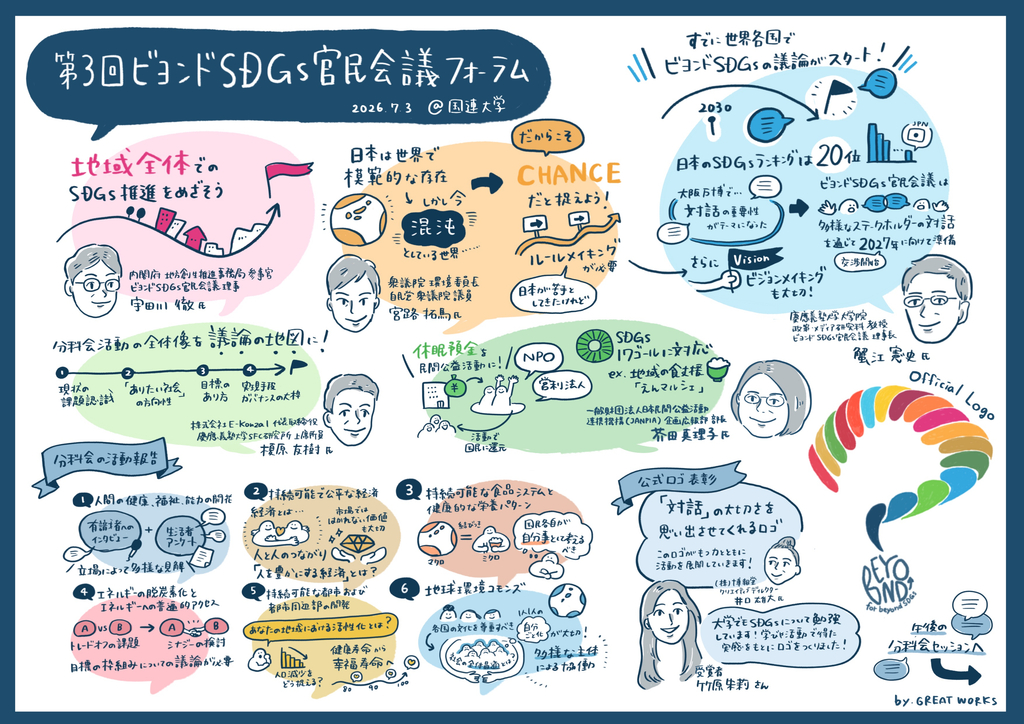
Photo: Tokuhiro Watari
Coverage: Impress Sustainable Lab “SDGs White Paper” Editorial Department
Graphic Recording: Sayaka Taniko (GREAT WORKS)
Click here for the 3rd Public Private Forum on Beyond SDGs: Forum Report 【Opening】
Click here for the 3rd Public Private Forum on Beyond SDGs: Forum Report 【Keynote Speech】