
3rd Public Private Forum on Beyond SDGs: Forum Report 【Keynote Speech】
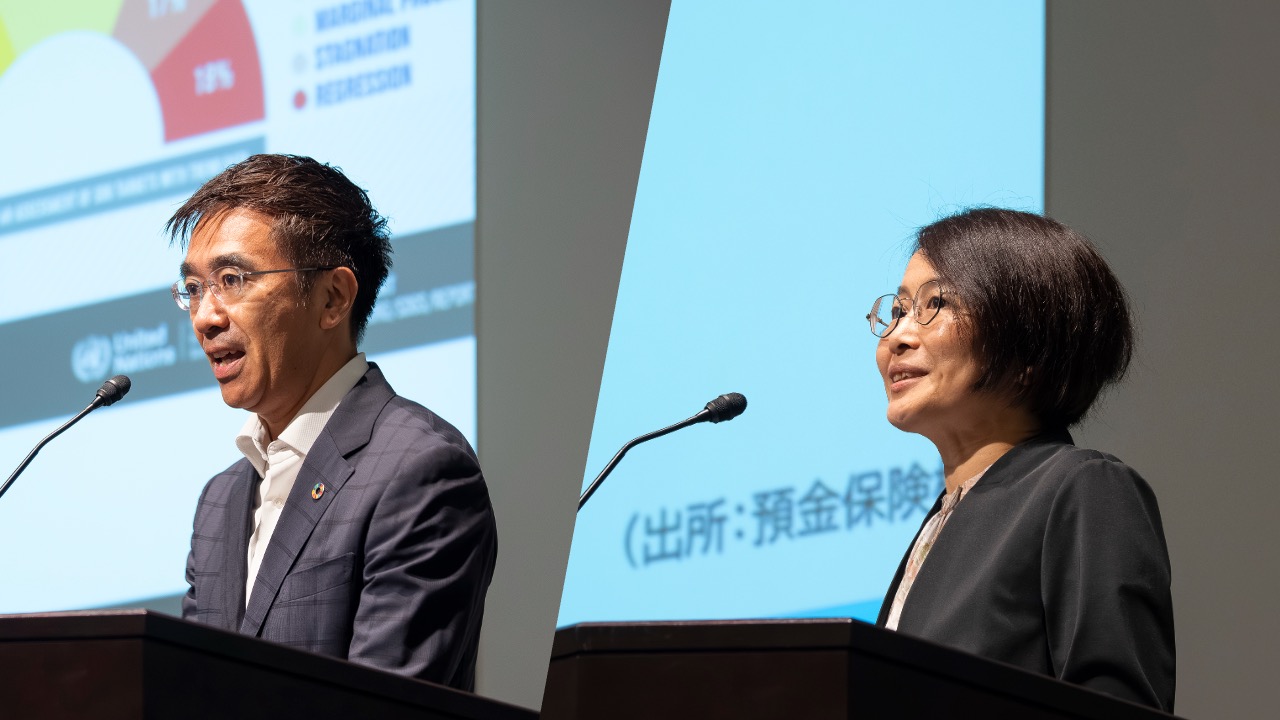
In the keynote address at the “3rd Public Private Forum on Beyond SDGs Forum,” Norichika Kanie, Chairperson of the Public Private Forum on Beyond SDGs and Professor at the Graduate School of Media and Governance, Keio University, presented the progress of the SDGs based on United Nations reports and other sources. Reflecting on the background behind the establishment of the Public Private Forum on Beyond SDGs, he outlined key discussion points toward international visions beyond 2030 from three perspectives: geopolitical trends, bottom-up regional approaches, and system-level responses. Additionally, Mariko Akuta of the Japan Network for Public Interest Activities [JANPIA] introduced the framework and track record of supporting private public-interest activities using dormant deposits, touching on the potential for region-led initiatives carried out by over 1,600 organizations to connect to Beyond SDGs.
”Activities and Future Developments of the Public Private Forum on Beyond SDGs”
Norichika Kanie (Professor, Graduate School of Media and Governance, Keio University / Chairperson, Public Private Forum on Beyond SDGs)
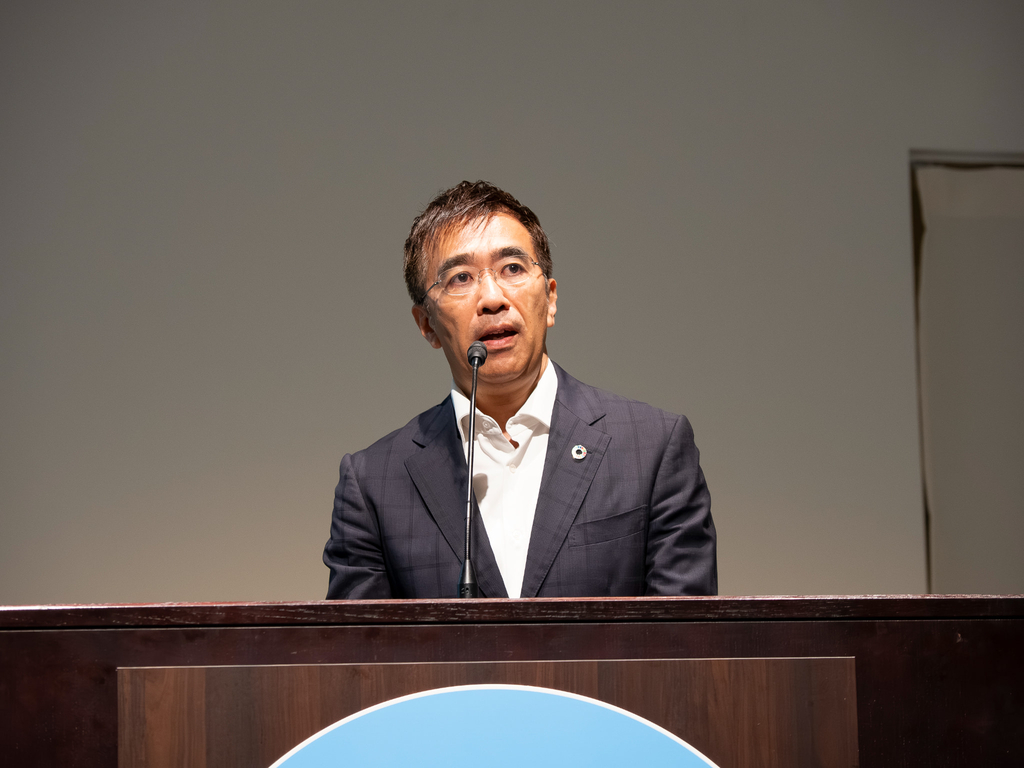
The Public Private Forum on Beyond SDGs Forum has now reached its 3rd iteration. I believe Beyond SDGs represents a major opportunity. While various crisis situations exist around the world, how can we turn them into opportunities? I believe the wisdom and power of dialogue among all of you play a crucial role in doing so.
Until the day before this forum, I participated in a sustainability conference held in Germany, which was filled with immense enthusiasm and attended by many business stakeholders. Discussions on the post-2030 agenda have begun globally as well. At the conference, there were opinions that we should not think of “SDG 2.0” merely as an extension of the SDGs, as well as opinions that we should proceed while preserving the framework of the SDGs. While they seem like two extremes, I feel they share a common ground in terms of how to constructively look ahead based on what the SDGs have accumulated. Countries in Europe and Asia are beginning to learn from the dialogue process we have conducted in Japan as a model of the Public Private Forum on Beyond SDGs.
In the UN Secretary-General’s progress report, the SDG achievement rate rose from 35% last year to 36%. At this pace, there is a possibility of reaching 40% by 2030, and studies suggest that an awareness shift of around 40% serves as a trigger for societal transformation. On the other hand, 1 in 10 people remains in extreme poverty, with aspects worsening due to the impacts of war. In the SDG Index announced last week, Japan ranked 20th. While its score rose to 81.0, its rank dropped due to progress in other countries. Within the G7, Germany ranked 5th, France 7th, and the UK 8th, making me keenly aware of differences in initiatives such as offshore wind power generation.
There are two factors behind establishing the Public Private Forum on Beyond SDGs. One is the “Pact for the Future” adopted at the UN General Assembly in September 2024, which stipulated that international negotiations on the post-2030 agenda will begin at the UN SDG Summit in 2027 (held once every four years since 2015). Considering that during the international negotiations when formulating the SDGs, the first year was dedicated to capacity building, preparation leading up to the start of negotiations in 2027 is crucial.
The other factor is last year’s Expo 2025 Osaka, Kansai. I was also involved in Theme Weeks, which served as a successful example of diverse people painting diverse futures through dialogue, with Beyond SDGs as the theme during the final week. Inheriting that legacy is this Public Private Forum on Beyond SDGs, which also bears the role of connecting to next year’s “GREEN×EXPO 2027” (International Horticultural Expo).
The 1st Public Private Forum on Beyond SDGs Forum was held near the Expo site with 130 participants, and the 2nd forum in February this year had 150 participants engaging in active discussions. We also plan to hold a dialogue event at the UN High-Level Political Forum next week.
When formulating the SDGs, “outside-in” (incorporating social issues into corporate strategy) was central, but moving forward, I believe “inside-out” (expanding corporate social initiatives globally) presents a major opportunity for Japanese companies. Even with efficiency in the AI era, situations where it can be utilized for strengthening synergies and resolving trade-offs are increasing.
I would like to offer three points as hints for today’s discussion. First is geopolitical trends. Precisely in an era where short-term consensus is difficult, we should learn from the history of solving climate change and biodiversity challenges, aiming for shared long-term visions as a means to overcome short-term backlash. Second is bottom-up approaches. As seen in Regional Revitalization SDGs and indigenous knowledge, hints for solving challenges lie precisely within familiar practices. Third is system-level responses. As seen in food loss reduction, many initiatives that generate synergies and avoid trade-offs exist on the front lines.
I hope you will engage in repeated, positive discussions grounded in evidence without denial. Positioning this forum as a turning point for future discussions, we intend to connect it to upcoming meetings in December this year and next year, as well as proposals to the government and the United Nations.
”On Support for Individual Beyond SDGs Activities Across Japan”
Mariko Akuta (Director of Planning and Public Relations, Japan Network for Public Interest Activities [JANPIA])
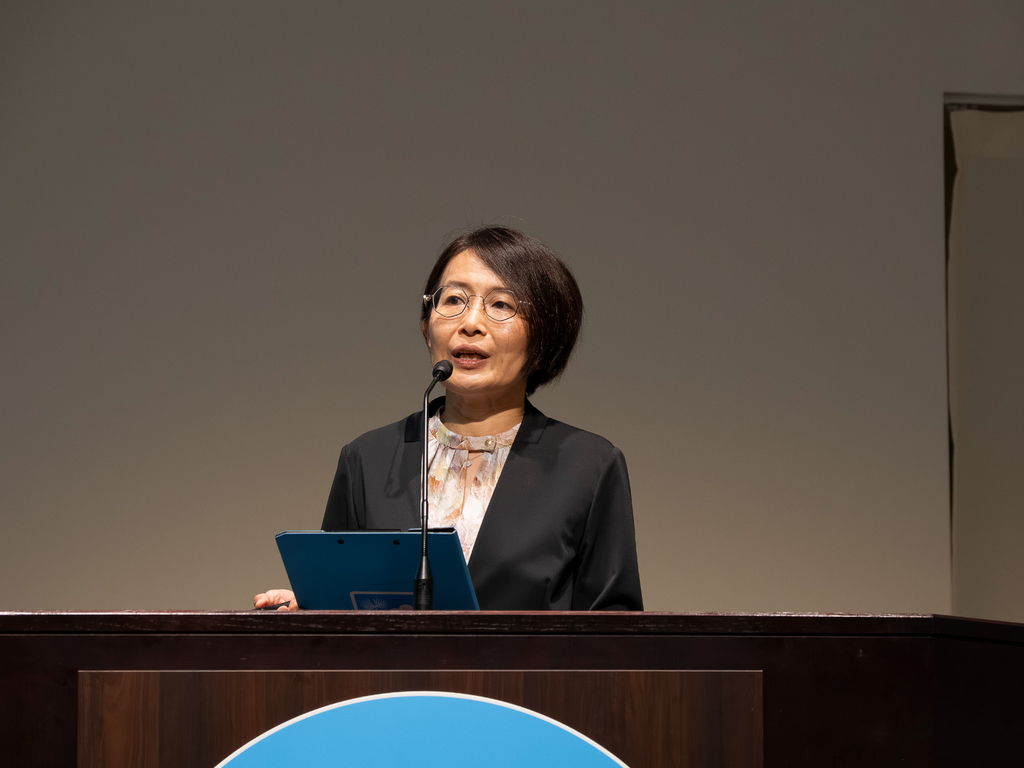
The Japan Network for Public Interest Activities [JANPIA] is an organization established in 2018 under the leadership of Keidanren (Japan Business Federation) as a designated utilization organization under the Act on Utilization of Dormant Deposits, etc., beginning its activities as a designated utilization organization in 2019. Its vision is “To be a catalyst for creating a sustainable society where no one is left behind,” sharing its aspirations with the SDGs since its founding.
“Dormant deposits” refer to deposits with no transactions for over 10 years. While depositors can still withdraw funds after 10 years have passed, the amount remaining as dormant deposits still totals around 150 billion yen annually. The system for utilizing dormant deposits is a mechanism that applies a portion of these funds toward private public-interest activities. Its goals are solving social issues that are difficult for national and local governments to address, fostering independent actors in private public-interest activities, and establishing funding environment infrastructure.
Under the system’s workflow, deposits passing 10 years are transferred from financial institutions to the Deposit Insurance Corporation of Japan and granted to JANPIA. Rather than selecting front-line organizations directly, JANPIA selects intermediary support organizations—such as fund allocation organizations and activity support organizations—through public calls, and those intermediary organizations then solicit and select implementing organizations (target organizations). Forms of support include grant projects, investment projects, and hands-on support (bansō shien), while also conducting social impact evaluations from the perspectives of transparency and accountability.
As priority social issues to be solved, there are three main pillars: support for children and youth, support for individuals facing difficulties in daily life, and support for regions facing difficult circumstances, all of which share an extremely high affinity with the SDGs.
Current track records show a total of 269 grant and investment projects combined, supporting 1,600 projects to date, with total funding reaching 41.9 billion yen. While many entities hold NPO legal status, diverse organizations utilize the program. Cross-cutting themes prominently feature human rights-related initiatives, targeting school refusal/social withdrawal (hikikomori), women’s empowerment, single-mother support, local communities, and disaster relief. By SDG goal, Goals 1, 4, 8, 13, and 17 are most frequent, with some top goals spanning up to 233 projects, while activities addressing all 17 goals are being implemented.
Here, let me introduce an example from NPO Enmaru in Nagano Prefecture. Selected four times for projects utilizing dormant deposits, this organization started with visiting sick child care. Through its activities, realizing mothers’ isolation and household financial hardship, it launched a home food delivery service for children (Kodomo Takushoku). Building relationships while delivering food, it further developed the community platform “Enmarushe.” Through a mechanism where companies donate products that would otherwise become food loss to be sold locally—connecting profits to child support—it serves as a venue involving local professional sports teams and schools.
A key feature of this initiative is that local residents participate not out of a sense of social contribution, but because it is “a great deal” or “fun,” which ultimately leads to child support as a result. A win-win-win relationship (sanpō-yoshi) is established: companies reduce food loss, local residents enjoy affordable shopping, and Enmaru secures funding for support. Addressing the loss of human connection behind isolation, they value restoring relationships through food and farmers’ markets (marche). Furthermore, their communication method—translating food loss into “bargain products,” donations into “shopping,” and social contribution into “fun activities”—is also distinctive.
Such challenges are being undertaken nationwide by over 1,600 organizations, advancing efforts to turn social issue resolution into replicable mechanisms. Sharing goals with the SDGs, JANPIA supports bottom-up challenges toward Beyond SDGs originating from local communities that transform not only actions and people, but society and systems themselves. We hope this will serve as a useful reference for future discussions.
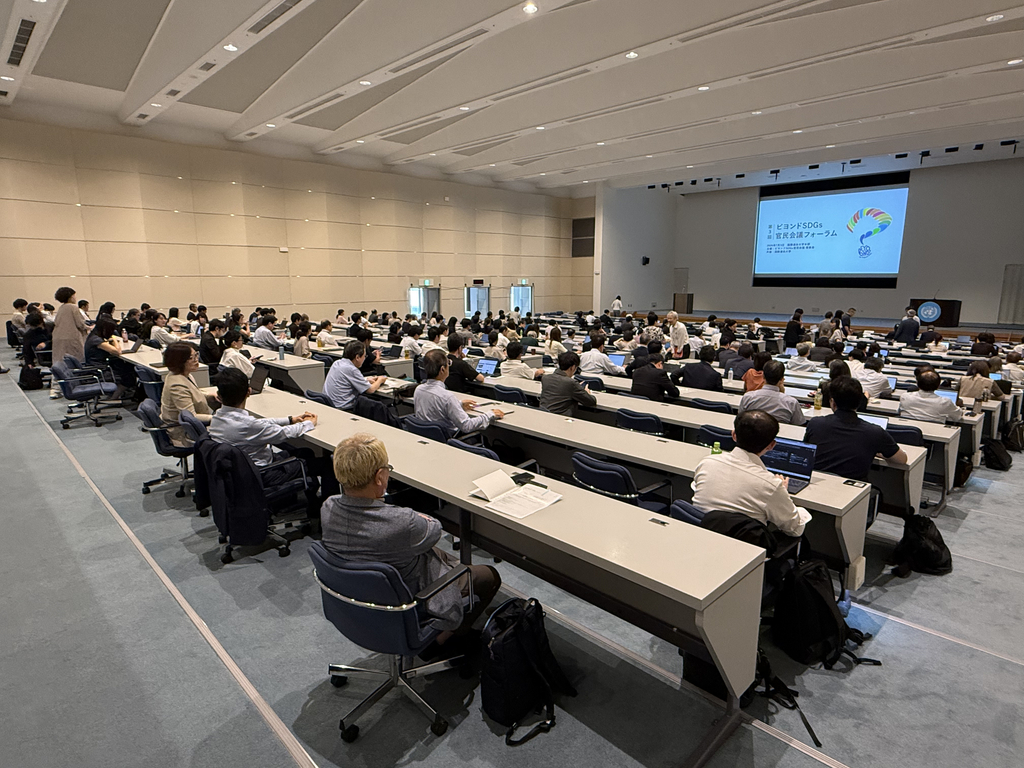
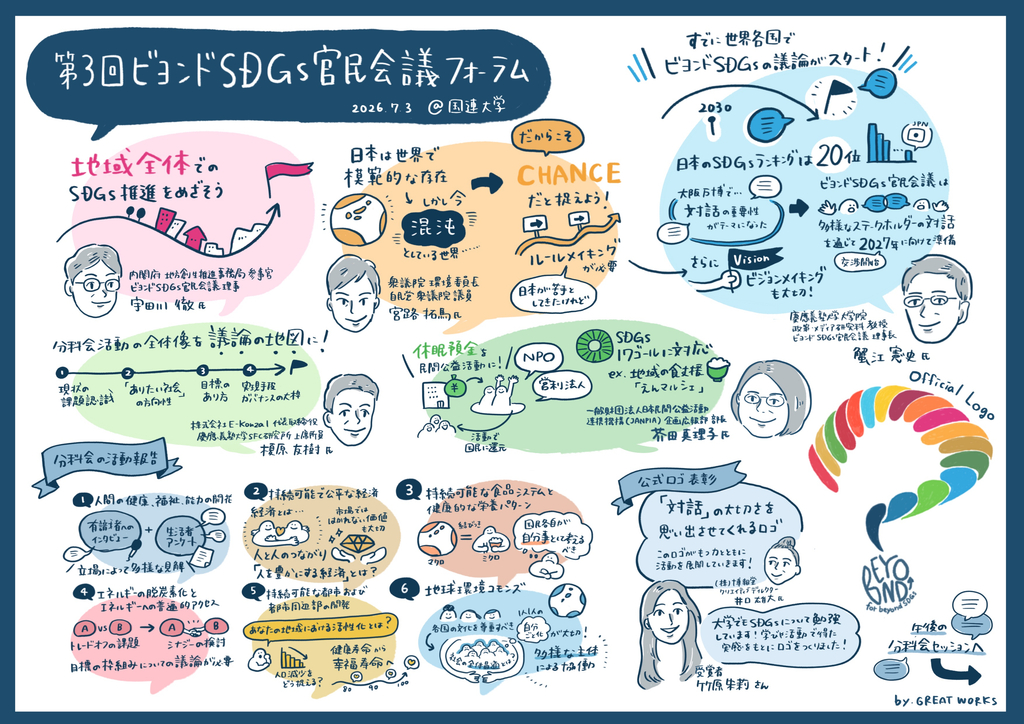
Photo: Tokuhiro Watari
Coverage: Impress Sustainable Lab “SDGs White Paper” Editorial Department
Graphic Recording: Sayaka Taniko (GREAT WORKS)
Click here for the 3rd Public Private Forum on Beyond SDGs: Forum Report 【Opening】
Click here for the 3rd Public Private Forum on Beyond SDGs: Forum Report 【Working Group Activity Report】