
[3rd Public Private Forum on Beyond SDGs Forum] Working Group Summary | Working Group 2: “Sustainable and just economies”
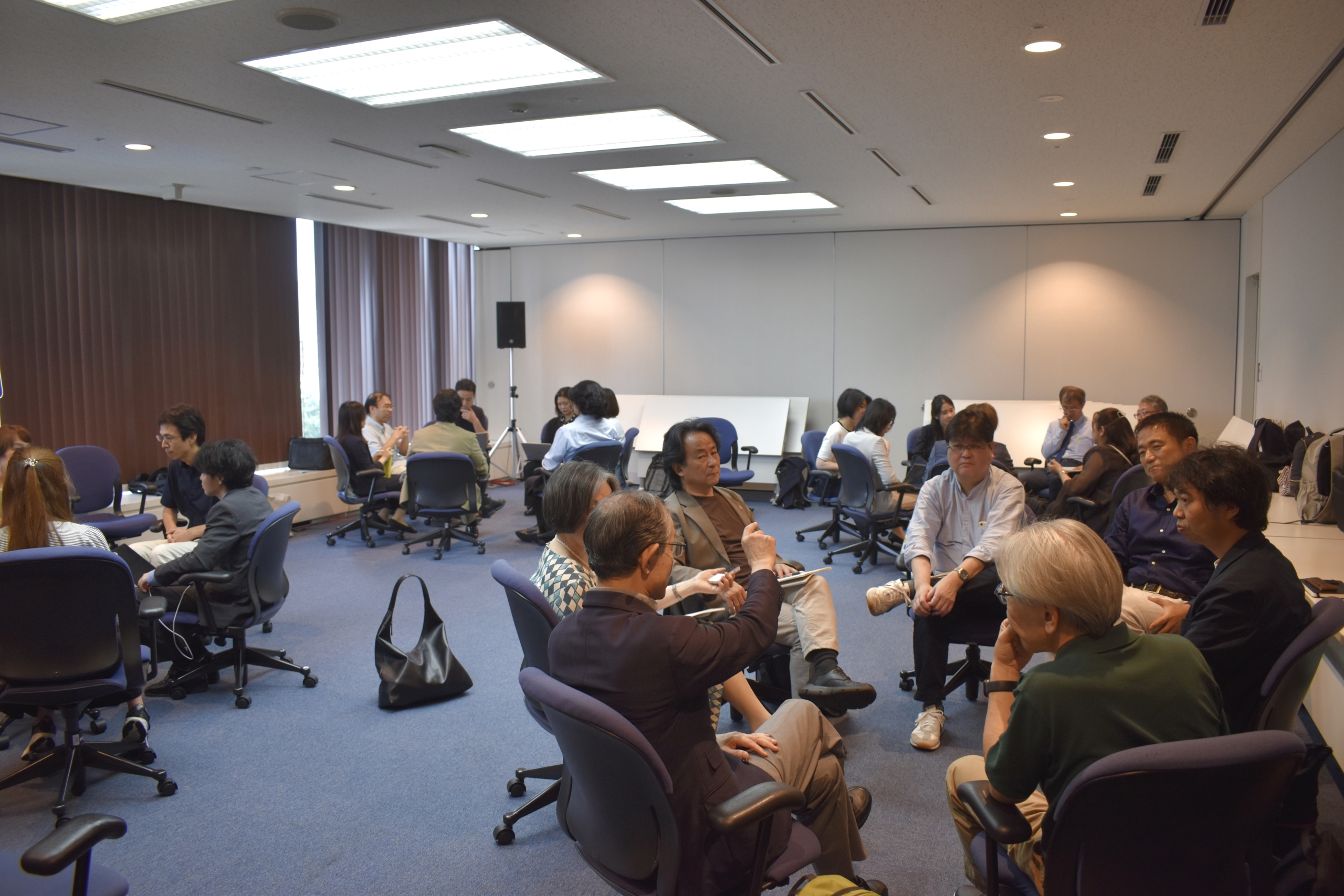
In Working Group 2, discussions are advancing not from the question of “how to achieve economic growth,” but from the fundamental question of “what does the economy exist for?” Under the agreement that the economy exists to connect people and contribute to human happiness, the following points were discussed:
While the current market economy has generated vast wealth, it has also created challenges that are difficult to resolve through market mechanisms alone, such as increasing environmental burdens, widening disparities, and burdens on future generations. Based on this reality, rather than rejecting the market economy, this Working Group is examining economic models where humans, society, and nature can coexist sustainably by correcting, evolving, and expanding market mechanisms—such as through environmental taxes or internalizing negative externalities.
How to Support Values That Cannot Be Realized Through Markets Alone
To realize a sustainable and just economy, it is necessary to direct attention to values that cannot be adequately captured by current market mechanisms. Education, welfare, environmental conservation, human rights, local communities, and social capital cannot be fully sustained by market principles alone. In this Working Group, discussions address the concept of a “Blended Economy,” where the market economy, the public economy (government and public services), and the social and solidarity economy (regions, NPOs, etc.) mutually complement one another. Additionally, the necessity of discussions regarding the public economic sector within government was pointed out. Furthermore, mechanisms to appropriately incorporate negative externalities—such as environmental burdens and human rights violations—into the economic system are also being examined.
Toward an Economy Where Humans, Society, Nature, and Technology Circulate
To make the economy sustainable, it is crucial to re-evaluate it by incorporating relationships with society and nature, not just humans. In this Working Group, a shared recognition exists on the need to construct mechanisms where humans, society, and nature mutually support one another in a circular manner. To this end, discussions are progressing on the circular economy, nature-positive concepts that restore biodiversity while utilizing economic mechanisms, approaches to resource use and consumption, and sustainable investment and consumer behavior.
Furthermore, AI is already a prerequisite for future society and economy. In this Working Group, rather than treating AI merely as a technology for efficiency, it is viewed as social common capital, with discussions covering how it should be utilized across a broad range of fields, including education and public services. At the same time, taking into account the environmental burden and employment impacts brought by AI, the ideal state of economic systems where technology, society, and environment harmonize is also being examined.
The Significance of Contemplating the Economy Through Beyond SDGs
In Beyond SDGs, while bridging various domestic and international discussions surrounding economic models, the objective is to integrally grasp humans, society, nature, and future generations, conceptualizing a sustainable economic system that brings fair opportunities to all people within finite resources. Sketching a new economic vision that integrates diverse values—such as social inclusion, public nature, circularity, and resilience—is a defining feature of this Working Group.
Future Discussions
Moving forward, while further substantiating the shared vision of a “sustainable and just economy,” discussions will deepen on specific themes such as education, finance, corporations, policy, AI, and the circular economy. Additionally, while organizing connections with relevant domestic and international initiatives, we plan to synthesize these into practical recommendations for the Beyond SDGs era beyond 2030.