
[3rd Public Private Forum on Beyond SDGs Forum] Working Group Summary | Working Group 3: “Sustainable food systems and nutrition patterns”
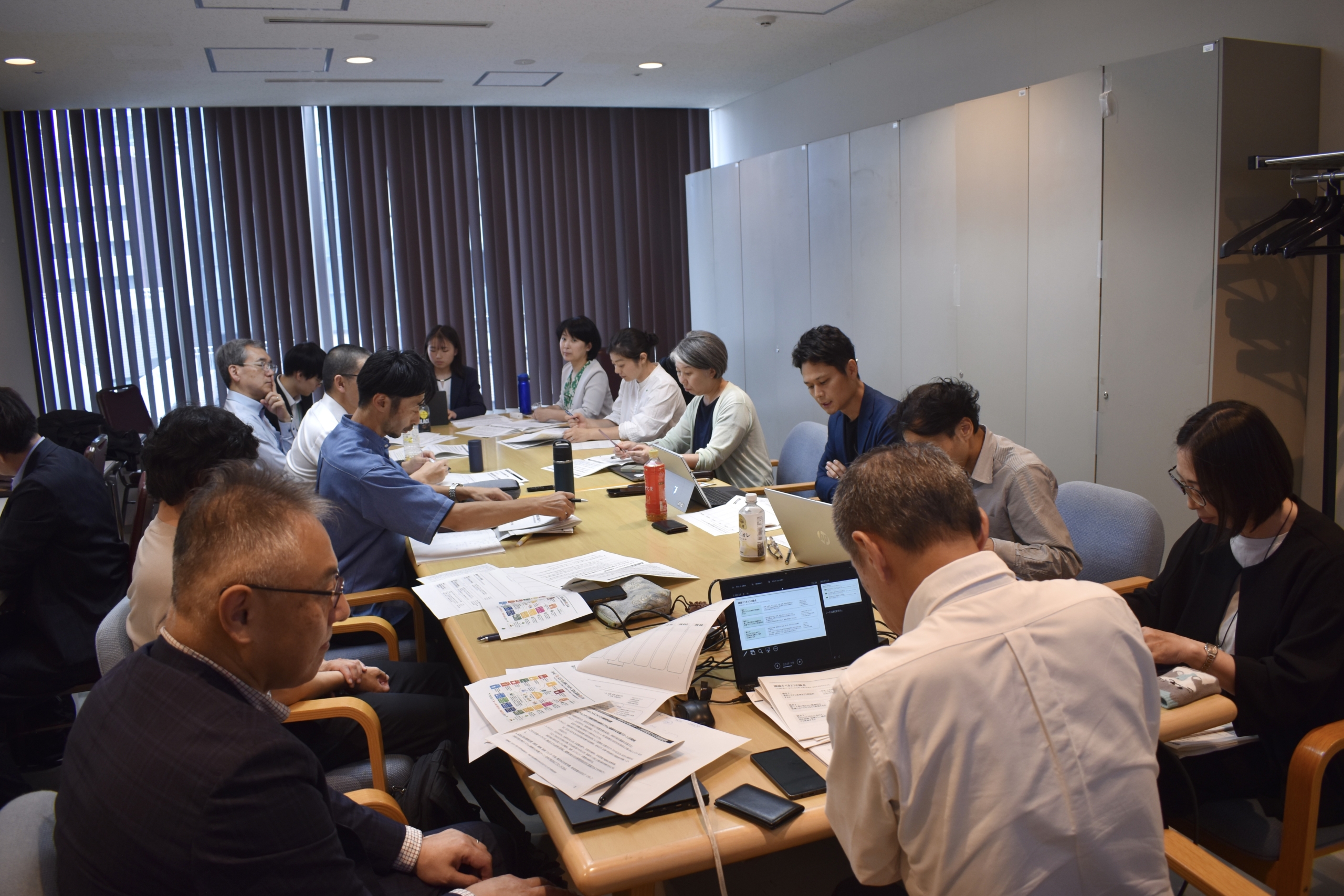
In Working Group 3, under the theme of “Sustainable Food Systems and Healthy Nutrition Patterns,” practitioners and experts from diverse fields—including producer organizations, cooperatives, corporations, local governments, NPOs, and research institutions—participated to discuss realizing a sustainable society through the lens of food. Building upon discussions up to the previous session, the working group organized the challenges facing food systems while exchanging views on what kind of society to aim for heading into the Beyond SDGs era beyond 2030.
Transformation of “Food Systems” Demanded by the International Community
At the outset, international trends regarding sustainable food systems and healthy nutrition patterns were shared. At the United Nations and the Food and Agriculture Organization (FAO), a sustainable and healthy diet is defined not merely as balanced nutrition, but as one with low environmental impact, safe, easily accessible, affordable, and continuously available to all. Furthermore, it was highlighted that the “double burden of malnutrition”—where undernutrition and overnutrition coexist—is worsening globally, while agricultural and food systems account for approximately 20 to 30 percent of global greenhouse gas emissions, and surging food prices and unfair trade structures severely impact smallholder farmers and low-income populations. A shared international recognition emerged that these challenges cannot be resolved through an extension of conventional policies, requiring a transformation of the entire food system.
From “Value Chain” to “Food System”
In the discussion, shifting mindsets from a “value chain” to a “food system” first emerged as a vital theme. Participants noted one after another that food should be grasped not as a “value chain” treating food as a one-way flow, but as a “food system” encompassing production, processing, distribution, consumption, and waste, alongside the natural environment, local communities, education, culture, and human connections. It was confirmed that food originally grew out of regional living and mutual aid, needing to be positioned not merely as a commodity, but as a foundation supporting human lives and local communities.
Integrating Environment, Agriculture, and Regions
Active discussions were also held on the sustainability of the environment and agriculture. While local consumption of local produce (chisan-chishō) and increasing domestic production ratios lead to reduced environmental impacts, it was highlighted that expanding organic farming in Japanese agriculture is not easy due to constraints such as small-scale operations and climatic conditions, whereas in other countries, pesticide and water pollution caused by large-scale agriculture are intensifying. Furthermore, perspectives were presented on the potential of increasing productivity while suppressing environmental impact through technological innovations like food tech, as well as how maintaining and developing domestic agriculture connects to reducing global environmental footprints as a whole. Additionally, opinions were exchanged on shared challenges across the entire food system, such as non-standard agricultural produce, excessive packaging, and consumers’ over-demanding quality expectations.
Toward a Society Centered on the “Right to Food”
In discussions surrounding “access to healthy nutrition where no one is left behind,” a concept was presented that rather than taking a “supporter” perspective, society should aim for one “where the right of all people to continuously choose and eat healthy food is guaranteed.” To continuously deliver healthy food, resolving challenges across the entire food system—including environmental issues, water resources, and marine pollution—is indispensable, with education and communication between producers and consumers playing crucial roles. Furthermore, regarding initiatives like children’s cafeterias (Kodomo Shokudō) and food banks, points were raised that they should be viewed through the lens of “rights” rather than “charity,” alongside the importance of creating environments where children themselves can choose food. In addition, the relationship between food and well-being was discussed from diverse perspectives, including the value of school lunches and home economics education, food access for senior citizens and single households, and creating regional dining and social interaction spaces.
New Targets and Implementation for Beyond SDGs
Regarding future visions for Beyond SDGs, views were exchanged on long-term food system transformation looking toward 2050, while treating 2040 as an important milestone. As a core target, it was proposed to center on “continuously delivering healthy food to all people,” utilizing healthy life expectancy, nutritional status, and well-being as indicators toward its realization. Furthermore, because food systems are heavily influenced not only by national policies but by corporate business activities and individual citizen choices, it was confirmed that constructing new governance where diverse stakeholders share roles and collaborate is necessary. Additionally, regarding food education (shokuiku), emphasis was placed on learning for adults as well as children, sharing the importance of education where people can understand diverse connections—symbolized by the concept of “food webs” rather than “food chains”—and feel connections between people, regions, and the world through food.
“Driving the SDGs Through Food”
What became clear through this working group is that “food” is not merely a topic for agricultural or nutritional policy, but a societal foundation connected to human health, the environment, local communities, the economy, education, culture, and even peace and human rights. Furthermore, food systems impact almost all 17 SDG goals, making the transformation to sustainable food systems an effective approach to advance the SDGs in their entirety simultaneously. Its success depends on whether diverse entities—including national and local governments, producers, consumers, corporations, cooperatives, educational institutions, and civil society—can collaborate and act together. This working group served as a crucial venue for discussion to share that direction.