
Public Private Forum on Beyond SDGs Kick-off Forum: Report 【Panel Discussion ① Concrete Initiatives Toward Beyond SDGs】
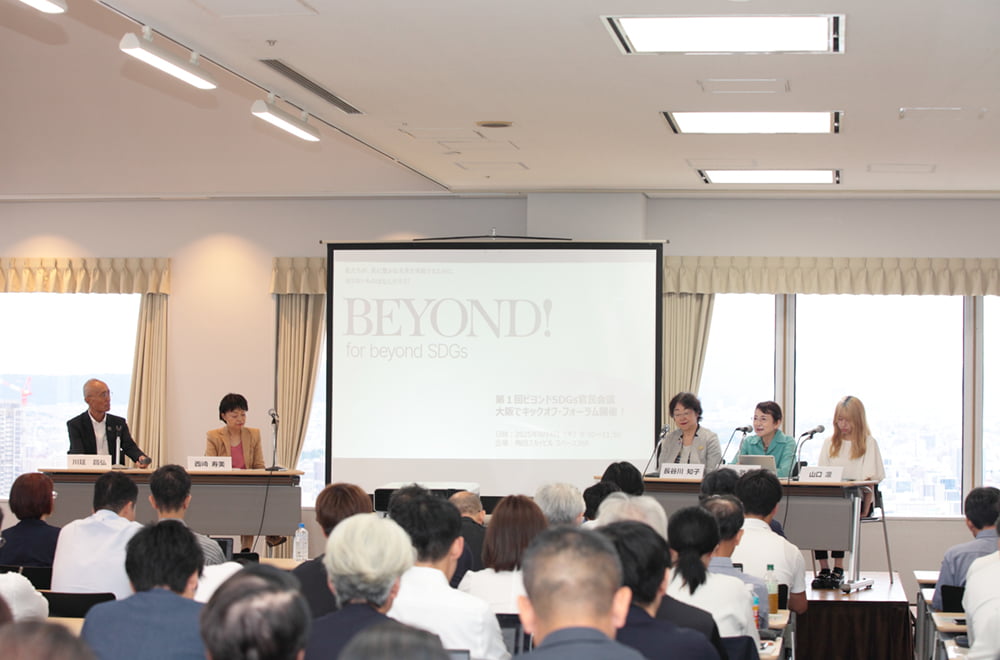
In 2025, as we mark the 10-year milestone since the adoption of the SDGs, what challenges are governments, businesses, civil society, and youth facing, and what hopes are they finding? In this panel discussion, representatives from the Ministry of Foreign Affairs, Keidanren, civil society networks, and youth platforms exchanged views on measures to accelerate the achievement of the SDGs and approaches looking ahead to “Beyond SDGs,” while reflecting on the “barriers” they have experienced so far. Concrete directions emerged from the thoughts shared by each panelist, such as collaboration transcending systemic silos, businesses transitioning into implementation phases, transformations originating from local communities, and the realization of meaningful youth participation.
Panelists
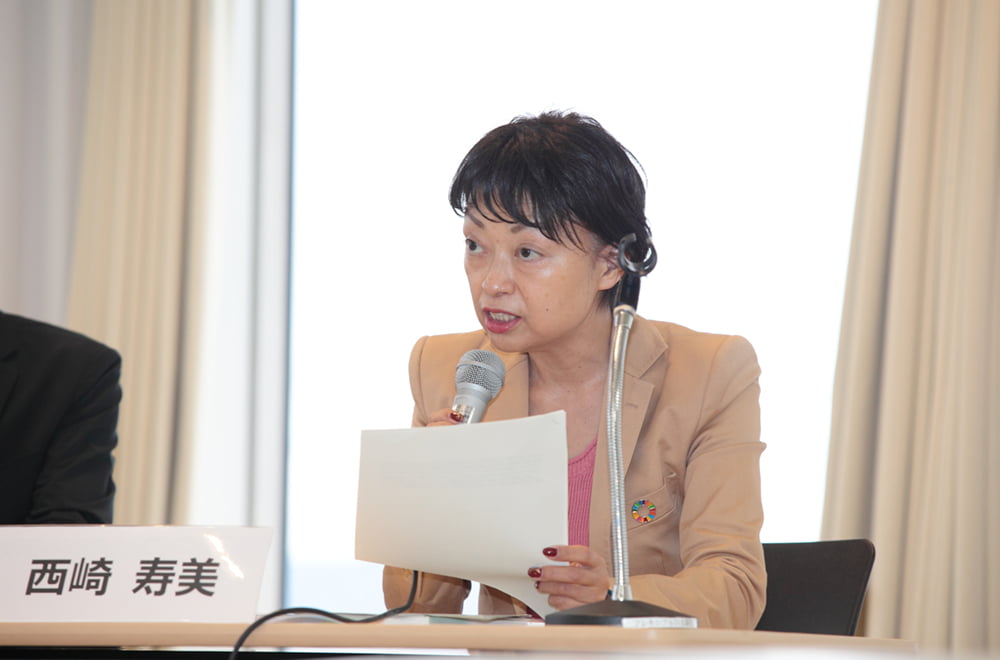
Sumi Nishizaki (Deputy Director-General, International Cooperation Bureau, Ministry of Foreign Affairs)
Tomoko Hasegawa (Managing Director, Keidanren [Japan Business Federation])
Atsuko Miwa (Co-Chair, Japan Civil Society Network on SDGs [SDGs Japan])
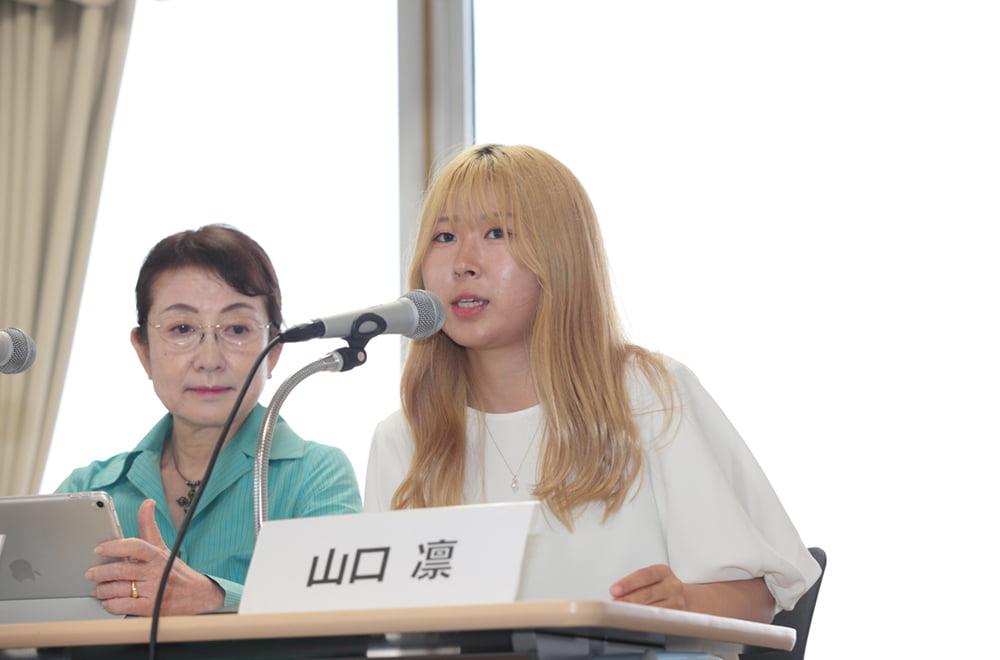
Rin Yamaguchi (Secretary General, Japan Youth Platform for Sustainability [JYPS])
Moderator
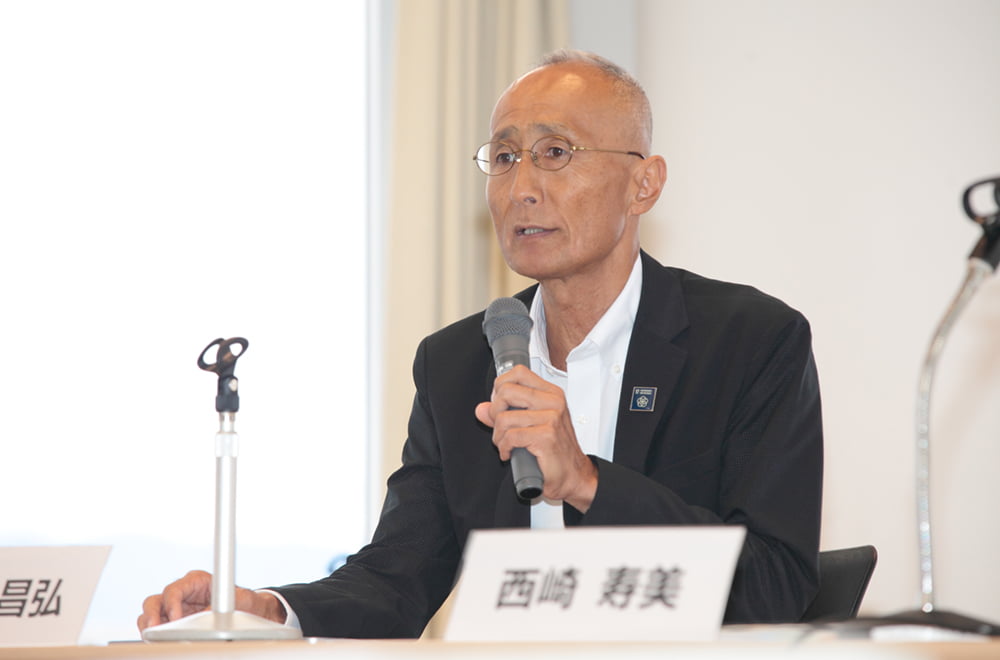
Masahiro Kawatei (Secretary General, Public Private Forum on Beyond SDGs)
Japan’s SDG Achievement Status and Challenges from a Global Perspective
- Kawatei
-
The Public Private Forum on Beyond SDGs was launched on the premise that everyone working on the SDGs is a member, and our job at the Secretariat is to help collect your initiatives and deliver them to the United Nations.
First, I would like to share our common understanding of the current situation. According to this year’s report by the Sustainable Development Solutions Network (SDSN), Japan ranks 19th in the world for SDG achievement. It is not that Japan is not working hard, but rather a situation where if other countries make progress, Japan’s ranking drops.
Regarding the goals, Goal 2 (Zero Hunger) and Goal 5 (Gender Equality) have long been pointed out as challenges. While all the panelists in this panel discussion are women today, I believe this becoming the norm is how things should naturally be. Regarding a circular society, climate change, and biodiversity conservation, despite Japan being a nation rich in nature, the international community asks how we view our societal structure dependent on fossil fuels.
Health (Goal 3) is virtually the only area evaluated as being achieved, while all others are said to still face challenges, so we must make further efforts.
The defining feature of the Voluntary National Review (VNR) recently presented by the Ministry of Foreign Affairs is that it was written with post-SDGs discussions in mind, highlighting Japan’s challenges—such as the declining birthrate and aging population, regional issues, and disaster prevention—that could serve as models for the international community. The report was created through a multi-stakeholder process, and the fact that it includes critical discussions has been praised globally.
Barriers to Achieving the SDGs Seen from Diverse Perspectives
- Kawatei
-
First, I would like to ask all the panelists to share the barriers you feel from your respective positions.
- Nishizaki
-
I am Sumi Nishizaki from the Ministry of Foreign Affairs. The Government of Japan established the SDGs Promotion Headquarters, and the Ministry of Foreign Affairs handles coordination with the UN as well as domestic SDG initiatives. This year, Japan conducted its third VNR in four years, reviewing progress from 2021 to 2025.
During this period, the international community has faced severe issues, including the spread of COVID-19, climate change, Russia’s invasion of Ukraine, and the situation in Gaza. While 2025 marks the 10-year milestone since the adoption of the SDGs, I believe that discussions on achieving the SDGs by 2030 and sustainability beyond that are facing far greater difficulties than when the SDGs were first adopted.
To break through these barriers, the Government of Japan intends to continue collaborating with diverse stakeholders to pave the way toward achieving the SDGs.。
- Hasegawa
-
I am Tomoko Hasegawa, Managing Director of Keidanren (Japan Business Federation). Keidanren is a comprehensive economic organization comprising 1,500 major companies, industrial associations, and regional economic organizations. In our action policy, we position the achievement of the SDGs through the realization of sustainable capitalism as a primary pillar, promoting member companies’ initiatives in fields where businesses can contribute, such as carbon neutrality, circular economy, biodiversity, and business and human rights.
What I perceive as a barrier is the siloed mindset and inward-looking thinking that hinder open innovation, even though we must drive it forward. I feel this both within the government and among Keidanren’s member companies, and it is something I grapple with daily.
- Miwa
-
I am Atsuko Miwa, Co-Chair of the Japan Civil Society Network on SDGs, commonly known as SDGs Japan. The SDGs have been hit by crises unimagined when they were adopted, a situation I have described as a “triple hardship”: the climate crisis stemming from climate change, the pandemic, and Russia’s invasion of Ukraine. No matter how deep the crisis, giving up on the SDGs is not an option for us. The SDGs were meant to transform the world through an integrated approach across the three dimensions of environment, society, and economy, but I keenly feel that peace is the essential prerequisite for this. War cruelly and fundamentally destroys all three.
Regarding barriers, a drastic system change is indispensable to achieving the SDGs, and overcoming bureaucratic compartmentalization is necessary for that. Internationally, I feel that restoring trust in multilateralism is an urgent challenge that requires immediate attention.
- Yamaguchi
-
I am Rin Yamaguchi, Secretary General of the Japan Youth Platform for Sustainability (JYPS). I am currently a third-year university student working to achieve meaningful youth participation toward a sustainable society. We conduct policy advocacy toward the Government of Japan and UN agencies, as well as awareness-raising activities among youth, and a column by our organization is included in the recent VNR.
The barrier I feel is that although youth are the ones most affected by current societal and global issues, many young people say they do not know where to start. I believe the cause lies in the increasing expertise and level of knowledge required in meetings and processes. To achieve meaningful youth participation, we need spaces where people can speak as equals, regardless of age or gender.
Proposals for a Sustainable Future Envisioned Through Dialogue and Collaboration
- Kawatei
I would like to ask Ms. Nishizaki. This VNR included extensive contributions written by multi-stakeholders, which feels like a new approach. Heading toward discussions on post-SDGs and post-2030, what kind of contribution should Japan envision?
- Nishizaki
As expressed in our revised SDGs Guiding Principles in October 2023, this VNR was created with broader stakeholder participation than ever before. Since October 2024, in addition to two SDGs Promotion Roundtable meetings, we held stakeholder meetings and youth exchanges to encourage participation from a wider range of stakeholders. We also conducted a public comment period lasting over a month, incorporating many opinions.
Furthermore, beyond the Japanese government’s evaluation, we included an independent Chapter 6 containing candid evaluations written by stakeholders. In discussions regarding international sustainability beyond 2030, Japan aims to play a leading role through the proactive participation of diverse stakeholders, much like the process of this VNR.
- Kawatei
How do you view making proposals that leverage Japan’s unique character and strengths?
- Nishizaki
The international community faces complex crises and growing fragmentation. In such a situation, what is key is returning to the core principle targeted by the current SDGs: maintaining peace and security in the international community, protecting human life and dignity, and cooperating to advance economic and social development.
Under the concept of human security, Japan will contribute to realizing the principle of leaving no one behind. Japan’s approach is not to impose from above, but to share values together.
Japan currently faces significant challenges, particularly being ahead of the world in dealing with an extremely severe declining birthrate, aging population, and demographic contraction. In discussions looking beyond 2030, as a front-runner in facing social challenges, we hope to share these issues with other countries, present our initiatives and insights as models to the international community, and promote value-sharing through dialogue and cooperation while emphasizing multilateralism.
- Kawatei
Moving to Ms. Hasegawa. It feels like business initiatives for the SDGs have shifted into an implementation phase. How do you view the background behind this shift?
- Hasegawa
You are absolutely right. The stage where companies simply placed SDG logos in their integrated reports and stated, “Our business contributes to the SDG goals,” has already passed. Today, companies are required to specifically demonstrate how much their businesses and projects contribute to solving global issues presented in the SDGs.
The background of this shift is that stakeholders, especially investors, are no longer satisfied with mere statements of “businesses contributing to the SDGs.” Companies need to demonstrate how SDG-contributing businesses lead to the enhancement of their medium-to-long-term corporate value as a value creation story using business models within their management strategies. In doing so, metrics such as interim targets and Key Performance Indicators (KPIs) have become essential.
What Keidanren has been recently focusing on is impact evaluation. Many companies express their reason for existence—the societal challenges they exist to solve—in the form of a purpose. By backcasting from their declared purpose to present value creation stories based on management strategies and business models, and by showing KPIs and impact metrics to measure progress toward them, companies and stakeholders (centered on investors) can engage in constructive dialogue using a shared metric.
- Kawatei
In the remaining five years, we must accelerate achievement while simultaneously discussing what comes next. Do you have any policy or institutional expectations to make it easier for businesses to take action?
- Hasegawa
Currently, under the second Trump administration, anti-ESG (Environmental, Social, and Governance) and anti-DEI (Diversity, Equity, and Inclusion) policies are being set forth, with the Trump administration explicitly opposing the SDGs as well. In the EU, reviews of sustainability-related policies are progressing, indicating a global backlash against the SDGs.
However, Japanese companies reaffirm their stance that sustainability should continue to be viewed as a growth opportunity and that contributing to the achievement of the SDGs strengthens their own competitiveness.
As for expectations of the government, first, we would like to see active promotion of the contributions and strengths of Japanese companies and the Japanese government toward the SDGs. We hope advanced initiatives will be communicated in areas such as disaster risk reduction (including the Sendai Framework for Disaster Risk Reduction), countermeasures against rural depopulation amid declining birthrates and aging populations, and biodiversity.
Furthermore, to support substantive company initiatives, we ask for support in formulating global standards for sustainability information disclosure, building data infrastructure related to impact evaluation, and gathering best practices. Additionally, to bridge the funding gap for development, we would appreciate support in leveraging synergies between Official Development Assistance (ODA) and private investment, as well as further utilizing blended finance that combines public and private funds to scale up investment size.

- Kawatei
Turning to Ms. Miwa. In the social sector, delays in gender equality and poverty reduction have been pointed out. From the perspective of civil society and local grassroots, how do you analyze the structural issues behind why progress is slow?
- Miwa
Let me start with a positive aspect. First, the SDGs serve as a vital concept making us recognize that complex issues cannot be solved unless diverse stakeholders collaborate. The recent VNR process had many notable aspects, including holding stakeholder meetings and establishing a chapter dedicated to stakeholder reports that incorporated critical views.
A crucial role was played by the Spotlight Report published by SDGs Japan. Regarding the stakeholder meetings, methods of information accessibility and ways to conduct working groups were thoughtfully discussed. The public comment period was also conducted for a month, but what is most important is that those inputs were concretely reflected in the actual final draft.
On the other hand, challenges remain. In a word, there is a reluctance toward change in this country. I feel this in various aspects such as gender equality, global warming countermeasures, and decarbonization. The Gender Gap Index is not only low in ranking, but it is also falling. There is a clear reason for this: changes happening around the world are not taking place in Japan.
Furthermore, in an opinion survey on climate change countermeasures published by the Global Citizens’ Assembly, to the question “What do climate change countermeasures mean to you?”, 60% of Japanese respondents answered “something that threatens quality of life,” compared to a global average of 26.75%. Only 17% of Japanese answered “something that improves quality of life,” whereas globally it was 66%—a complete inverse.
I feel that past success during the high economic growth era lies behind this inability to change. There is a saying: “It is not the strongest of the species that survives, nor the most intelligent, but the one most responsive to change.” Isn’t it important for us to become more proactive about changing? Stripped of affiliations, everyone is an individual citizen. I believe it is vital to share the commitment that we must not leave an unsustainable society to future generations and to bring about change.
- Kawatei
As a civil society network, what mechanisms or innovations do you think are necessary to balance communicating success stories and highlighting challenges?
- Miwa
I feel that success stories are continuously emerging from local regions, so we want to strive to share them. Advanced practices are also emerging in various companies; even without explicitly using the term “SDGs,” new innovative practices to build the future are arising in fields like renewable energy and decarbonization.
Analyzing how success stories became possible leads to identifying new challenges as well. Looking at local success stories, I feel that overcoming bureaucratic compartmentalization might be easier to achieve at the local level. In human rights, a comprehensive anti-discrimination ordinance came into effect in Mie Prefecture about two years ago. I believe hope for the future actually springs from local regions, which includes small and medium-sized enterprises (SMEs).

- Kawatei
Asking Ms. Yamaguchi. What efforts have you made so far to achieve meaningful youth participation?
- Yamaguchi
Our organization works toward a society where sectors considered socially vulnerable—including youth, women, and persons with disabilities—are left behind by no one and can engage in democratic activities proactively.
We created a policy proposal titled “SDGs Youth Proposal 2023” as a policy recommendation regarding the SDGs Guiding Principles revised by the Japanese government in 2023. It was drafted based on input from 107 youth participants in online events and 101 survey responses collected online.
The most common feedback was that although many places claim to realize meaningful youth participation, they merely offer a seat and stop there, or that due to a lack of financial support, students cannot cover travel expenses even with part-time jobs and thus cannot attend events. Also, age sometimes got in the way; even when receiving speaking invitations, some events declined us simply for being minors.
Okayama Prefecture versus an event with identical content held in Tokyo. In urban areas like Tokyo, because there are many events, young people can exchange views with diverse peers and have opportunities to interact with corporate headquarters and government ministries. Conversely, in Okayama, such events are rarely held in the first place, and many voiced that they could not exchange views with others sharing similar concerns. Since the gap between regional areas and metropolitan cities is prominent, we want to focus our future activities on how to gather “unheard voices” through holding events in regional areas.
- Kawatei
A Youth Review was also conducted this time. How do you hope the government and local authorities will utilize youth voices moving forward?
- Yamaguchi
I believe it is necessary to thoroughly follow up rather than just submitting policy proposals and stopping there. While follow-up results do not easily appear in one or two years and require a continuous long-term view, we also face the challenge that this may not make it in time for the 2030 SDG deadline.
This time, as a Voluntary Youth Review, we investigated the current progress of the SDGs from a youth perspective. Our organization marks its 10th anniversary this year after starting activities in 2015, and I believe youth participation has advanced significantly over the past two to three years.
Thanks to the efforts of the Ministry of Foreign Affairs, securing youth seats at the SDGs Promotion Roundtable, youth participation as government observers at COPs, and financial guarantees have all significantly advanced youth participation. However, speaking opportunities for youth are provided in only parts of meetings and processes, and selection criteria regarding which youth can participate remain opaque. Therefore, we hope the systems promoting youth participation will be further refined.
Additionally, we recognize that the actual inclusion of our Voluntary Youth Review in the government’s official VNR is a rare case worldwide. To spread this across Asia and globally, we would like to consider how to disseminate information and connect youth networks.
Insights Emerging from the Dialogue
- Kawatei
Thank you all for sharing your passionate thoughts. Ideally, I would have liked to have more cross-talk, but I believe there was an immense amount of essence contained in each person’s passionate words.
In this panel, I asked questions so that everyone could feel these two aspects: measures to accelerate the achievement of the SDGs, and perspectives for carving out the path beyond 2030. I hope that all of you, becoming organizers yourselves next time, will challenge yourselves to synthesize outcomes and opinions toward Beyond SDGs.

Photo: Yasuhiro Fujii
Coverage: Impress Sustainable Lab “SDGs White Paper” Editorial Department
Graphic Recording: Sayaka Taniko (GREAT WORKS)
Click here for the Public Private Forum on Beyond SDGs Kick-off Forum: Report 【Opening Remarks and Input Talk】
Click here for the Public Private Forum on Beyond SDGs Kick-off Forum: Report 【Panel Discussion ②】